

 Travel Essentials
 Travel Essentials

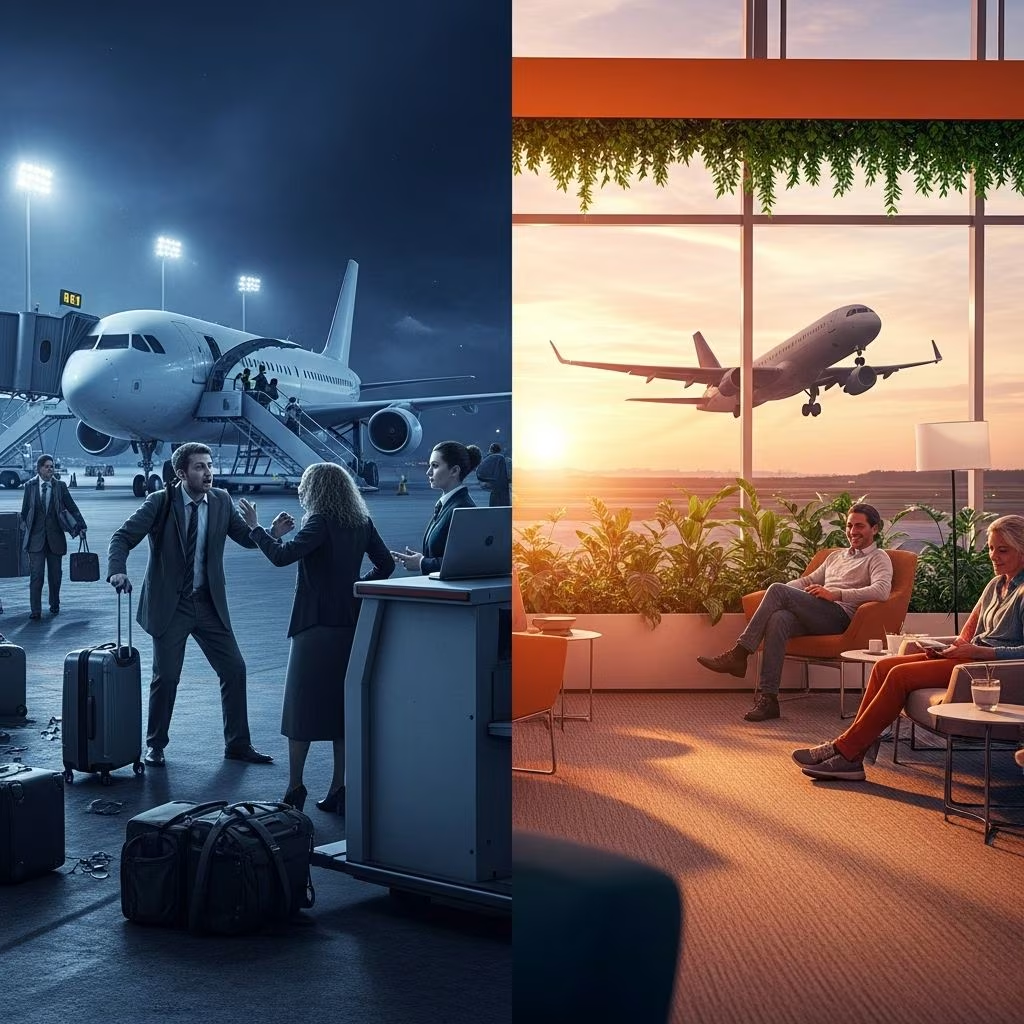
Explore the key flaws of terrible airports like long queues, poor design, and rude staff, contrasted with features of amazing ones featuring innovation, comfort, and efficiency.
 Travel Essentials
Airports serve as the gateways to our adventures, yet they often feel like obstacles rather than facilitators. What separates a dreadful terminal from one that sparks joy? This article dives into the core issues plaguing poor airports and envisions ideal solutions drawn from global experiences.
Terrible airports share recurring problems that frustrate millions of passengers annually. These issues range from physical design flaws to operational inefficiencies, turning what should be a smooth transition into a grueling ordeal.
Long lines at security, immigration, and baggage claim top the list of complaints. Airports like Los Angeles International (LAX) and New York’s John F. Kennedy (JFK) are infamous for these delays, where high passenger volumes overwhelm outdated infrastructure. Similarly, London Heathrow battles chronic overcrowding, with confusing layouts exacerbating the chaos.
Poor spatial planning creates mazes of narrow corridors and illogical paths. European hubs like London Stansted feature low ceilings and pillar-blocked flows, fostering a claustrophobic feel. In the U.S., Newark Liberty suffers from bad signage, leading passengers astray amid crowds.
Travelers report hiking vast distances without adequate transport like moving walkways or trams, especially burdensome with heavy luggage. Frankfurt’s pre-improvement era highlighted this with non-functional escalators forcing stair climbs.
Many airports lag behind modern standards. Manila’s terminals appear rundown, while LAX’s disjointed structures feel bland and neglected. King Fahd International in Dammam boasts obsolete amenities, contributing to discomfort.
| Airport | Main Complaints | Impact on Travelers |
|---|---|---|
| LAX | Congestion, long lines, rude staff | Frustrated arrivals, missed connections |
| JFK | Outdated terminals, delays | Chaotic navigation, stress buildup |
| Lagos Murtala Muhammed | Bribes, poor service, vandalism risks | Safety concerns, extended waits |
| London Luton | Overcrowding, slow security | Peak-hour nightmares |
Interactions with personnel can make or break trips. LAX and JFK staff are often described as curt or hostile, contrasting sharply with global norms. In Lagos, corruption adds insult, with demands for bribes from officials.
Sterile airside zones lack shops, eateries, or rest areas post-security, as in some Malaysian airports. Smoking zones poorly ventilated spill fumes into common areas, like older Narita setups. Mosquito-infested arrivals halls in tropical spots pose health risks.
Top-tier airports prioritize passenger well-being through smart design, technology, and service. They transform layovers into pleasures rather than punishments.
Intuitive layouts with wide corridors, clear signage, and airside connections minimize extra security for connections. Ample seating near gates and functional escalators/elevators ease movement.
Visual appeal calms nerves. Singapore Changi’s Jewel features a towering waterfall amid greenery, while Doha and Abu Dhabi offer airy gardens and light-filled halls. These elements create serene oases amid travel hustle.
Excellent dining, shopping, and lounges abound. Coat-check services, like Frankfurt’s, lighten loads. Free Wi-Fi, charging stations, and quiet zones cater to diverse needs.
Automated check-ins, biometric scanners, and facial recognition speed processes. Real-time flight updates via apps reduce anxiety. Centralized management, unlike the U.S.’s fragmented model, ensures consistency.
Friendly, multilingual teams enhance experiences. Cultural exhibits and local cuisine foster welcome feelings.
Examining specific airports reveals actionable insights.
Built decades ago, LAX handles far more traffic than designed, leading to perpetual backups. Post-9/11 security demands strain original checkpoints. Solutions? Terminal expansions and better inter-terminal transport.
Changi invests in innovation: vast green spaces, entertainment, and efficient ops make it a destination. Its modular design scales with demand seamlessly.
Besides disrepair, systemic issues like bribe demands erode trust. Reforms need strict oversight and staff training.
Future-proofing requires holistic upgrades.
Design Priorities: Prioritize natural light, high ceilings, and biophilic elements (plants, water features) to reduce stress.
Tech Integration: AI for crowd management, robots for guidance, and predictive analytics for staffing.
Sustainability: Solar power, efficient HVAC, and waste reduction appeal to eco-conscious flyers.
Passenger-Centric Policies: Free storage, priority lanes for families/elderly, and pet relief zones.
Opinions vary, but Lagos Murtala Muhammed often ranks low due to corruption, delays, and poor facilities.
Arrive early, use lounge access, download airport apps, and pack snacks/entertainment.
Key traits: efficient processes, beautiful design, ample amenities, and courteous staff.
Many struggle with age and volume, unlike newer Asian/European hubs, due to decentralized management.
Yes—biometrics and automation cut queues significantly in forward-thinking airports.
| Aspect | Terrible Airports | Amazing Airports |
|---|---|---|
| Queues | Hours-long waits | Automated, under 15 mins |
| Design | Cramped, dark | Airy, green, intuitive |
| Staff | Rude, corrupt | Helpful, trained |
| Amenities | Limited, outdated | Diverse, luxurious |
| Tech | Minimal | Biometrics, apps |
By addressing these pain points, airports can elevate from mere transit points to memorable experiences. Travelers deserve better—hubs that inspire rather than irritate.
