

 Travel Essentials
 Travel Essentials

Explore Wrangell-St. Elias National Park: largest U.S. park with massive glaciers, towering peaks, historic mines, and remote adventures in Alaska's untamed heart.
 Travel Essentials
Spanning over **13.2 million acres**, Wrangell-St. Elias National Park and Preserve stands as the largest national park in the United States, dwarfing even Yellowstone by a factor of six. This immense Alaskan wilderness encompasses nine of the tallest peaks in the country, over 60 glaciers longer than 25 miles, and some of the most dramatic landscapes on Earth—from icefalls cascading into turquoise lakes to volcanic summits piercing the sky. Established in 1980 as part of the Alaska National Interest Lands Conservation Act, it protects a unique blend of natural wonders, Native Alaskan heritage, and industrial history, offering adventurers a chance to experience true remoteness.
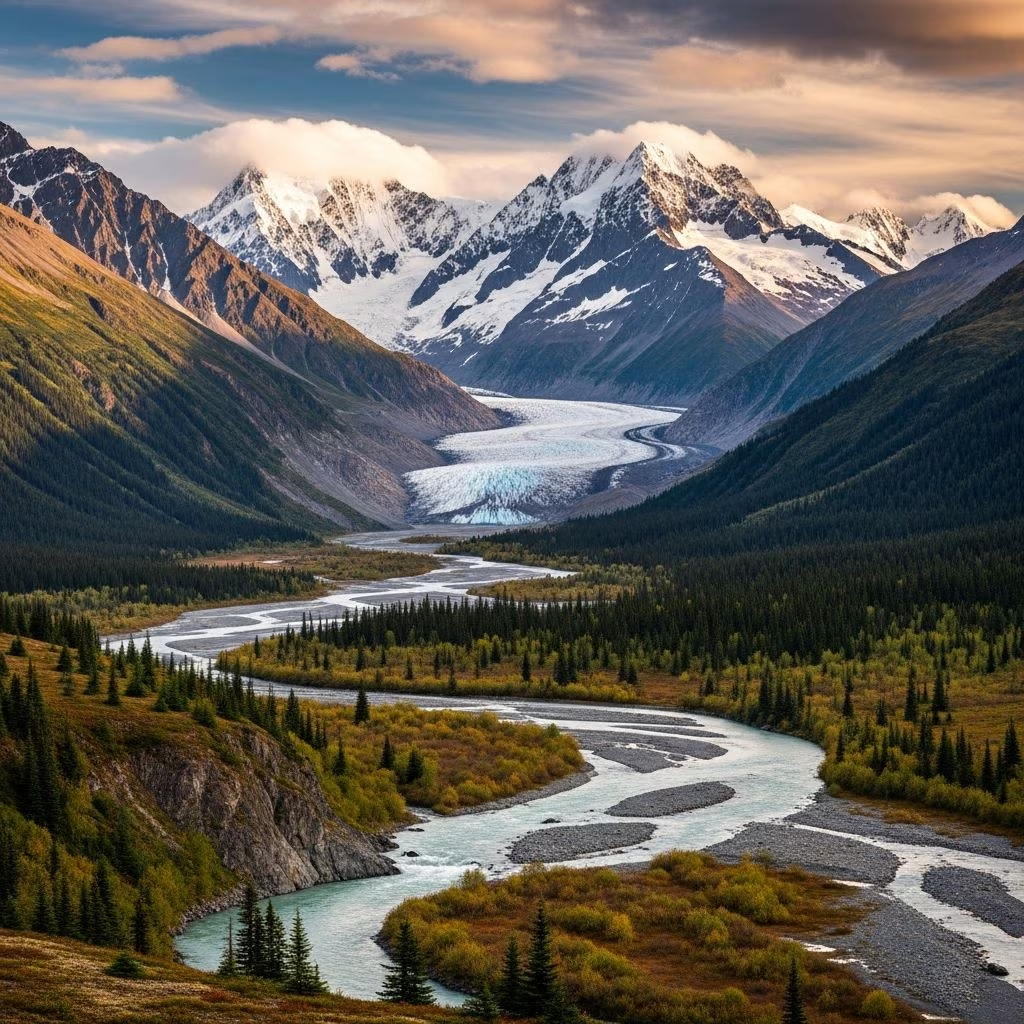
The park’s sheer size defies easy comprehension. It stretches from the Chugach Mountains in the south to the Alaska Range in the north, bordered by Canada’s Yukon Territory. Within its boundaries lie the Bagley Ice Field, the largest subcontinental ice field in North America, feeding massive glaciers like the Malaspina and Guyot. These rivers of ice have shaped the landscape for millennia, carving U-shaped valleys and depositing moraines that hikers traverse today.
Volcanic activity adds another layer of dynamism. Mount Wrangell, an active stratovolcano rising to 14,163 feet, looms over the region—its Ahtna name, K’ełt’aeni, translates to “the one that controls the weather.” Nearby, the park preserves evidence of ancient eruptions and ongoing geothermal features, reminding visitors of the Earth’s restless power.
Wrangell-St. Elias is not for the faint of heart or those seeking paved roads and crowded viewpoints. With limited infrastructure, reaching its core requires planning, grit, and a tolerance for unpaved gravel highways. The main entry points cluster around five key areas: Copper Center, McCarthy-Kennicott, Nabesna, Slana, and the park’s southern flanks near Yakutat.
| Access Area | Road Distance from Anchorage | Key Features | Travel Time (Car) |
|---|---|---|---|
| Copper Center | 190 miles (Richardson Hwy) | Main visitor center, ranger station | 4-5 hours |
| McCarthy-Kennicott | 230 miles + shuttle/footbridge | Glaciers, historic mines | 6-7 hours + 1 hour shuttle |
| Nabesna Road | 250 miles (via Tok Cutoff) | Remote mining ruins, quiet trails | 6-8 hours |
| Slana | 200 miles (Glenn Hwy) | Visitor contact station, hunting info | 4-6 hours |
From Anchorage, the Glenn and Richardson Highways provide the primary routes. The final 60 miles to McCarthy demand a shuttle across the Kennicott River or a hand-pulled tram over the historic footbridge—adding an adventurous twist to arrival. Air taxis from Chitina or Glennallen offer stunning aerial perspectives for those short on time.
The park rewards bold explorers with world-class activities tailored to varying skill levels. Whether you’re hiking boot-packed trails or strapping on crampons, the emphasis is on guided experiences for safety in this unpredictable terrain.
The Root Glacier Trail, a moderate 4-mile round-trip from the Kennicott trailhead, leads to the glacier’s toe where icebergs calve into meltwater pools. Equipped with ropes and ice axes via outfitters like Kennicott Guides, visitors ascend crevassed surfaces for breathtaking blue-ice vistas. For adrenaline seekers, ice climbing on seracs or packrafting the Kennicott River combine technical skill with raw beauty.
Once the heart of the Kennecott Copper Corporation—America’s richest copper mine from 1911-1938—the McCarthy-Kennicott area preserves 14-story milling structures, bunkhouses, and rail relics. Self-guided walks reveal the boomtown’s rise and fall, while ranger-led tours delve into Ahtna and Tlingit histories intertwined with the mines. Hike to Bonanza Mine for panoramic views of the abandoned workings high on the mountainside.
This 42-mile gravel route from the Tok Cutoff offers solitude. Stops include the old Nabesna Mine site, homestead cabins, and Kendesnii (‘Grass’) Campground at mile 27.8—the park’s sole NPS-developed site. Paddle or fish the Nabesna River for grayling and Dolly Varden amid bear country.
Brown bears roam freely, drawn to salmon streams and berry patches. Black bears and moose are common, with Dall sheep on cliffs and caribou herds migrating seasonally. Follow NPS guidelines: store food in bear-proof containers, travel in groups, and carry spray. Videos on bear encounters at visitor centers emphasize noise-making and group awareness.
Options range from rustic to remote. McCarthy Road lodges like the Golden View and Glacier View offer hot showers and meals. Nabesna’s Wilderness Lodge provides gravel-road access. Backcountry camping requires free permits; check weather via NPS apps. No reservations for Kendesnii Campground—first-come, first-served.
For immersion, bush plane drop-offs lead to fly-in fishing or multi-day backpacking in the preserve’s 9 million acres open to hunting and trapping.
May-September offers daylight and thawed trails, peaking in July with wildflowers. Winter brings snowmachine access but extreme cold (-40°F). Permits: Free for day use; backcountry registration advised.
| Category | Must-Haves |
|---|---|
| Clothing | Waterproof layers, gaiters, sturdy boots |
| Navigation | Topographic maps, GPS, compass (cell service spotty) |
| Safety | Bear spray, satellite communicator, first aid |
| Camping | Bear canister, lightweight tent, stove |
Ahtna Athabascan people have stewarded these lands for 10,000 years, with oral histories naming peaks and glaciers. Chitina Native Corporation manages easements; respect private inholdings (750,000 acres). Visitor centers screen films like Crown of the Continent, blending Native perspectives with conservation.
Most roads close in winter; check NPS for conditions. Summer gravel roads require high-clearance 4WD.
Strongly recommended for crevasses; self-guided to the Root Glacier toe is feasible.
Preserve sections allow it with Alaska licenses; park proper prohibits.
Remoteness: Pack all supplies, fuel up early, prepare for no services.
No—free entry, but shuttle fees apply (~$10-15 round-trip to McCarthy).
Wrangell-St. Elias demands respect for its scale and solitude, rewarding those who venture deep with lifelong memories of untamed America.
