

 Travel Essentials
 Travel Essentials

Explore Xi'an's iconic Terracotta Army, Ming Dynasty walls, and vibrant cultural landmarks. Complete travel planning guide for first-time visitors.
 Travel Essentials
Nestled in north-central China, Xi’an stands as one of the world’s most historically significant urban centers, earning recognition from UNESCO as a “World Historical City” alongside Rome, Cairo, and Athens. This ancient metropolis, formerly known as Chang’an meaning “everlasting peace,” served as the capital for 13 successive Chinese dynasties spanning more than 1,100 years. With over 3,000 years of continuous civilization, Xi’an remains an open-air museum where layers of imperial grandeur, military heritage, and cultural treasures coexist within remarkably preserved monuments and ongoing archaeological discoveries.
The prominence of Xi’an in Chinese history cannot be overstated. During the Qin Dynasty (221-207 BCE), the city served as the capital of China’s first unified state under Emperor Qin Shi Huang. The Western Han Dynasty (202 BCE-9 CE) subsequently transformed Xi’an into a flourishing center of commerce, culture, and political power. The golden age of Xi’an reached its zenith during the Tang Dynasty (618-907), when the city became the largest and most prosperous metropolis in the entire world, serving as a crucial hub on the legendary Silk Road trade network. This extraordinary historical trajectory has left an indelible mark on the city’s geography, architecture, and cultural identity.
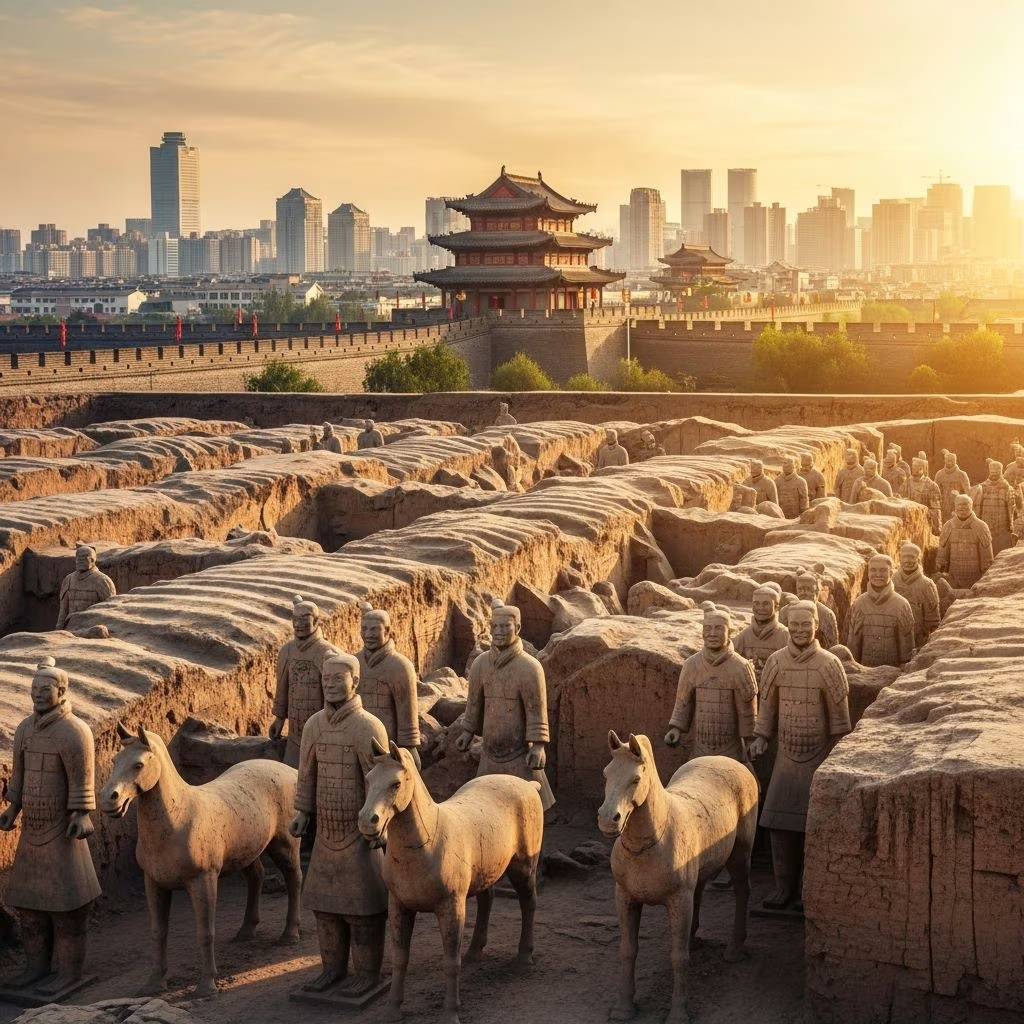
No discussion of Xi’an is complete without addressing its most iconic attraction: the Terracotta Army. This monumental underground garrison, comprising approximately 7,000 terracotta statues of warriors and soldiers, was commissioned by Emperor Qin Shi Huang around 210 BCE to serve as a protective force in the afterlife. Each figure was meticulously crafted with individual facial features, distinct armor styles, and varied poses, reflecting the sophisticated artistic and organizational capabilities of ancient Qin civilization.
The discovery of this archaeological treasure occurred remarkably recently in 1974, when three local farmers accidentally unearthed the warriors while digging a well for their village. This serendipitous finding revolutionized our understanding of ancient Chinese military organization and burial practices. Ongoing excavation and restoration work continues at the museum site, with archaeologists regularly uncovering new details about the construction techniques and organizational systems employed by ancient craftsmen. Visitors to the Terracotta Army Museum can observe warriors in various stages of restoration, providing insight into both the original craftsmanship and modern conservation methodologies.
Encircling the heart of Xi’an stands an imposing defensive structure that has protected the city for centuries. The City Wall represents one of China’s most impressive military engineering achievements. While the wall’s origins trace back to the Tang Dynasty in the 7th century, the structure visible today was rebuilt and reinforced during the Ming Dynasty in the 14th century. This well-preserved fortification features four primary gates among its total of 18 entrances, creating a complete rectangular perimeter that visitors can traverse on foot or by bicycle.
The wall extends approximately 14 kilometers in circumference, and a complete circuit typically requires 3-4 hours of walking time. Many visitors choose to explore sections rather than the entire perimeter, particularly the areas near the South Gate, which offer exceptional panoramic views of the city and surrounding landscape. Walking or cycling atop the wide stone ramparts provides both practical transportation and an immersive historical experience, allowing travelers to visualize how ancient defenders monitored approaches to the city and controlled trade traffic along the Silk Road.
Within and near the walled city center stand several architectural landmarks that have guided residents and visitors for centuries. The Bell Tower and Drum Tower represent functional as well as symbolic monuments from earlier dynasties. Originally used to mark time for the city and coordinate activities across different quarters, these towers now serve as cultural centers hosting performances and exhibitions that celebrate traditional Chinese arts.
The Giant Wild Goose Pagoda, constructed during the Tang Dynasty in the 7th century as part of the Ci’en Temple complex, remains an architectural marvel rising prominently above the urban landscape. This Buddhist structure is surrounded by meticulously maintained gardens, and the plaza north of the pagoda hosts fountain performances at regular intervals (12:00, 16:00, 19:00, and 21:00 daily), creating evening entertainment opportunities for visitors. The pagoda’s elegant proportions and spiritual significance make it a focal point for both photography and contemplation.
The Shaanxi History Museum provides comprehensive context for understanding the artifacts and historical narratives scattered throughout Xi’an. Located conveniently near the Wild Goose Pagoda and Great Tang All Day Mall, the museum houses extensive collections of pottery, bronze vessels, calligraphy, and other cultural relics spanning multiple dynasties. Museum exhibits are organized chronologically and thematically, allowing visitors to trace the evolution of Chinese civilization from prehistoric periods through the imperial era.
These museum collections complement on-site archaeological experiences, offering interpretive frameworks that enhance understanding of monuments like the Terracotta Army Museum. Guided tours available in multiple languages provide specialized expertise, while audio guides and interactive displays accommodate different learning preferences and travel paces.
Xi’an’s gastronomic traditions reflect centuries of cultural exchange and regional agricultural practices. The city is celebrated for distinctive noodle dishes, particularly Biang Biang noodles, which feature hand-pulled, wide ribbons of wheat dough prepared with various sauces and accompaniments. These distinctive noodles represent more than culinary appeal—they embody traditional preparation techniques passed through generations of local cooks.
The Muslim Quarter represents another essential culinary and cultural destination within Xi’an. This historic neighborhood buzzes with street vendors, family-operated restaurants, and specialty food stalls offering lamb skewers, flatbreads, and other regional specialties. The Quarter provides authentic sensory experiences that complement historical site visits, allowing travelers to engage with living cultural traditions rather than only viewing preserved artifacts.
Beyond the central urban area, Xi’an offers compelling natural and cultural attractions. Huashan Mountain, located to the east, ranks among the world’s most challenging and dangerous mountain peaks, attracting adventurous hikers with its dramatic vertical cliffs and narrow pathways. The mountain’s spiritual significance and extreme terrain make it suitable primarily for experienced climbers with appropriate preparation and safety equipment.
The Huaqing Palace, situated outside the city proper, represents reconstructed imperial bathing facilities dating back approximately 3,000 years. The complex features restored pavilions, reflecting pools, and landscaped gardens that recreate historical leisure environments. The site also hosts performances of “Song of Everlasting Sorrow,” a theatrical production combining music, dance, and historical narrative to tell stories of Tang Dynasty imperial life.
Optimizing limited travel time requires strategic itinerary planning. Travel specialists recommend allocating 2-4 days for a comprehensive Xi’an experience, allowing time to absorb the city’s historical depth without excessive rushing. A sample allocation might dedicate one half-day to the Terracotta Army Museum, followed by the remaining half-day exploring the City Wall, Bell Tower, Drum Tower, and Muslim Quarter. This arrangement accommodates travel time while preventing visitor fatigue.
Day two could focus on consolidated attractions within the eastern district: the Shaanxi History Museum, Giant Wild Goose Pagoda, and commercial/entertainment areas can be efficiently visited together due to their physical proximity. Evening activities might include performances at the South Gate or Tang Dynasty cultural shows, providing entertainment and cultural immersion after daytime sightseeing.
Visitors with extended time (4+ days) should consider western suburban excursions to imperial mausoleums and archaeological sites offering deeper engagement with specific historical periods. Such extended itineraries allow for more contemplative pacing and less crowded experiences at major attractions.
Modern Xi’an offers efficient public transportation connecting major attractions. Metro lines provide convenient access from the airport to city center locations. Metro Line 14 connects Xi’an Xianyang International Airport to Xi’an North Railway Station, from which Lines 2 and 4 reach major tourist destinations including the Bell Tower, South Gate, and Wild Goose Pagoda. This integrated system eliminates reliance on taxis or private drivers for most travelers.
Within the walled city, walking remains viable for many attractions, while cycling offers an enjoyable alternative for exploring the City Wall perimeter and accessing nearby temples or museums. Digital payment systems prevalent in contemporary China facilitate transactions at public transportation venues and tourist facilities.
Xi’an’s evening programming offers diverse cultural experiences beyond daytime sightseeing. The South Gate hosts free performances including opening ceremonies, changing of the guard presentations, and warrior parades beginning at 9:30 AM, extending into midday hours. These theatrical presentations combine historical reenactment with contemporary production values, engaging audiences through visual spectacle and narrative storytelling.
Professional productions like “Tang Dynasty Paradise” and performances at Huaqing Palace provide ticketed entertainment featuring costumed performers, elaborate staging, and historical themes. Opportunities exist for visitor participation through Tang Dynasty costume photoshoots available both through local arrangements and online platforms, creating memorable documentation of Xi’an experiences.
Xi’an’s architectural monuments and archaeological sites offer exceptional photography opportunities throughout the year. The City Wall provides elevated vantage points for landscape photography capturing urban contrasts between ancient fortifications and modern development. The Wild Goose Pagoda’s surrounding gardens and evening fountains create particularly photogenic scenes during twilight hours.
Seasonal timing affects both weather conditions and visitor density. Spring and autumn typically offer mild temperatures and clearer skies, facilitating comfortable outdoor exploration. Summer heat can be intense, while winter temperatures remain moderate by northern Chinese standards, though occasional cold snaps occur. Visitor volume peaks during Chinese national holidays and international vacation periods, so flexible scheduling accommodates crowd preferences.
Maximizing Xi’an’s offerings requires balancing major attractions with rest periods, meal breaks, and spontaneous discoveries. Purchasing attraction tickets in advance via online platforms reduces on-site queuing, particularly for the Terracotta Army Museum and popular performances. Allocating time for informal wandering through residential neighborhoods and markets provides authentic cultural engagement complementing formal historical sites.
Engaging with local guides or documented audio tours enhances interpretive depth, transforming monument visits from visual appreciation into comprehensive historical learning. Many museums and major attractions offer multilingual services accommodating international visitors while supporting local employment and cultural knowledge transmission.
Xi’an’s strategic location within China facilitates regional travel combinations. The city serves as a natural hub for Silk Road-themed journeys, given its historical role as the eastern terminus of this legendary trade network. Contemporary transportation networks connect Xi’an to Beijing, Shanghai, and other major cities, positioning Xi’an as either a primary destination or an enriching component of multi-city China itineraries.
