

 Travel Essentials
 Travel Essentials

Discover Tokyo's essential rail loop: the Yamanote Line. Explore 30 stations from Shibuya's buzz to Ueno's parks, with tips for seamless travel and top attractions at each stop.
 Travel Essentials
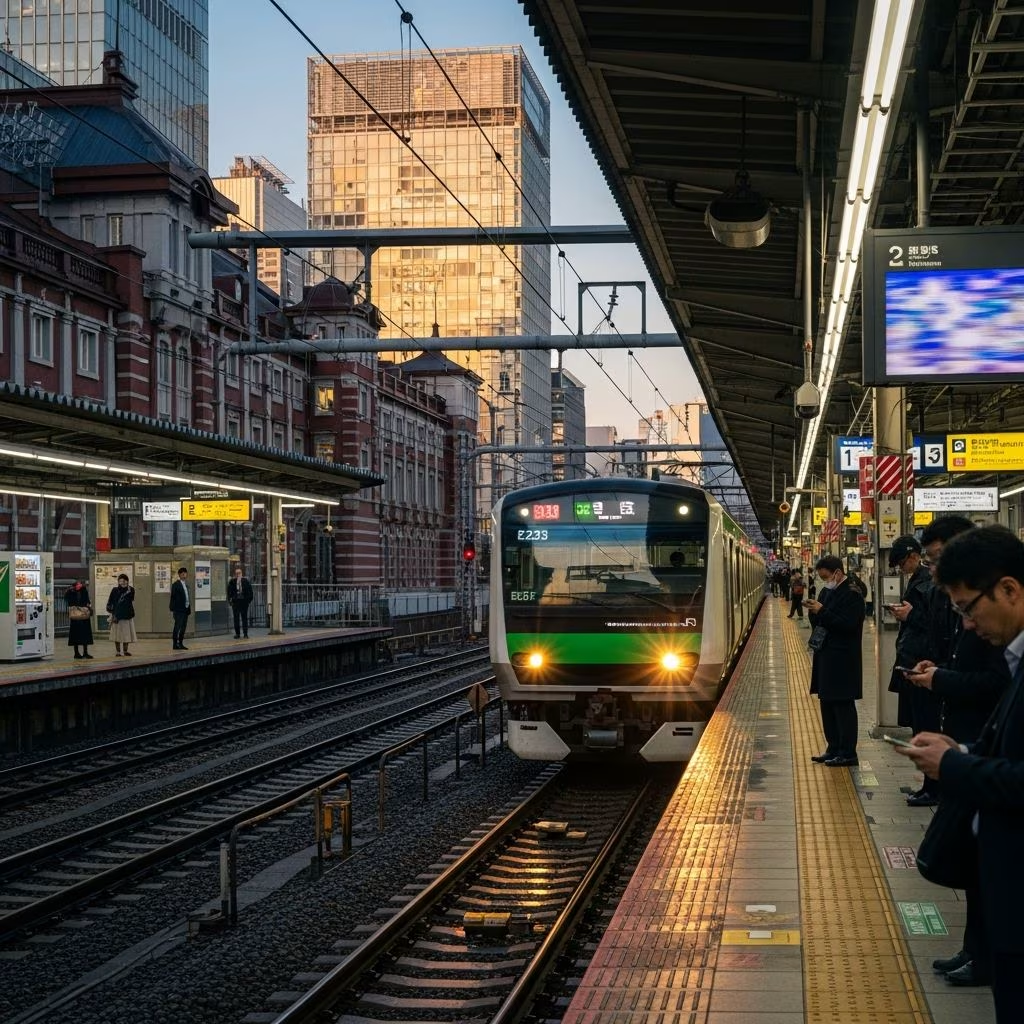
The Yamanote Line stands as Tokyo’s vital artery, a 34.5-kilometer circular route operated by JR East that links 30 key stations across the city’s core districts. This lime-green marked line, fully covered by the Japan Rail Pass, offers local trains stopping at every station, completing a full loop in roughly 60 minutes with services running every 2-4 minutes.
Navigating this loop is straightforward for visitors. Trains operate from around 4:30 a.m. to 1:20 a.m., with multilingual signage in English, Japanese, Chinese, and Korean at stations. Color-coded maps highlight the green Yamanote path, distinguishing inner (uchimawari) and outer (sotomawari) directions. Peak hours (7:30-9 a.m. and 5:30-7 p.m.) bring crowds, so opt for off-peak travel.
Begin at major hubs like Shibuya, Shinjuku, or Tokyo Station for convenience. Clockwise or counterclockwise? Counterclockwise (outer loop) hits trendy spots first, while clockwise favors business areas. Platforms are clearly marked; check digital displays for next departures.
| Direction | Key Early Stops | Best For |
|---|---|---|
| Counterclockwise (Outer) | Shibuya → Harajuku → Shinjuku | Youth culture, shopping |
| Clockwise (Inner) | Shibuya → Ebisu → Meguro | Relaxed eateries, residential vibes |
Tokyo’s pulsing intersection awaits at Shibuya, famed for its scramble crossing and neon lights. Beyond the chaos, Hachiko statue honors loyalty, while Shibuya Sky offers panoramic views. Dive into shopping at Shibuya Scramble Square or trendy cafes.
Crepes, cosplay, and kawaii fashion define Harajuku. Stroll Takeshita Street for street food and boutiques, then serene Meiji Shrine via nearby paths. Omotesando blends high fashion with architecture.
Adjacent to massive Yoyogi Park, perfect for people-watching rockabilly dancers on Sundays. National Yoyogi Stadium hosts events; ideal for picnics amid cherry blossoms.
The world’s busiest station sprawls across districts. Kabukicho buzzes with nightlife, Golden Gai alleys hide tiny bars, and Shinjuku Gyoen offers tranquil gardens. Skyscrapers like Tokyo Metropolitan Government Building provide free observatories.
Otome Road caters to female anime fans, Sunshine City mixes aquarium, planetarium, and outlets. Less crowded than Shinjuku, it’s a northern gateway with diverse eats.
A quieter stop near artistic cafes and the unique Lock-Up themed restaurant. Good for a breather before busier zones.
Known as ‘Harajuku for grannies,’ Jizo-dori Street sells retro sweets and bargains. Toden Arakawa Line tram adds vintage charm.
Rikugien Gardens boast seasonal beauty; nearby Tokyo National Museum of Modern Art extensions. Serene escape.
Residential with Yanaka Cemetery’s cherry-lined paths, evoking old Tokyo.
Gateway to Yanaka’s preserved shitamachi (old town) with temples and cat streets.
Cultural epicenter: Ueno Park’s museums, zoo, and lotus-filled Shinobazu Pond. Ameyoko market haggles for seafood and souvenirs.
Tucked away, features Tennoji Temple and quiet walks; overlooked gem.
Electric Town pulses with anime, maid cafes, and gadget shops. Retro arcades and otaku culture thrive; evening transforms into izakaya haven.
Kappabashi Street specializes in kitchenware; Ameyoko nearby for bargains.
Loop reinforces Ueno’s centrality.
Kanda Myojin Shrine blends Shinto lore; Jimbocho’s rare bookstores attract bibliophiles.
Red-brick icon with Shinkansen platforms, Character Street shops, and Gransta gourmet halls. Marunouchi side gleams with offices.
Under-rail izakayas sizzle; Hibiya Park for events.
Salaryman hub with old Tokyo Station remnants; Kagurazaka alleys nearby.
Monorail to Tokyo Tower; Zojo-ji Temple’s pagoda frames the tower.
Business area with Tokyo Tower views; emerging craft beer spots.
Mikawajima? No: Meguro River sakura fame; upscale dining.
Yebisu Garden Place for beer museum; chic eateries.
Completes the circle.
Maximize with a full loop first for bearings, then hop-off. Use IC cards (Suica/Pasmo) for seamless fares. Pack light; lockers abound at majors. Combine with walking for depth.
Yes, fully covered for unlimited rides.
About 60 minutes non-stop.
Counterclockwise for popular west-side spots first.
Yes, coin lockers and delivery at major stations.
Midday or late evening; skip 8 a.m. rush.
Explore lesser stops like Nippori for fabric district or Shinagawa for samurai residences. Night rides reveal neon transformations. Seasonal events—cherry blossoms at Ueno, illuminations in Shibuya—elevate repeats.
This loop encapsulates Tokyo’s blend of ancient and futuristic, accessible via one efficient line. Whether first-timer or local, the Yamanote delivers endless discovery.
