

 Travel Essentials
 Travel Essentials

Explore the lethal risks of Yellowstone's hot springs, where over 20 deaths have occurred. Learn vital safety rules from official sources to protect yourself and the park's unique ecosystem.
 Travel Essentials
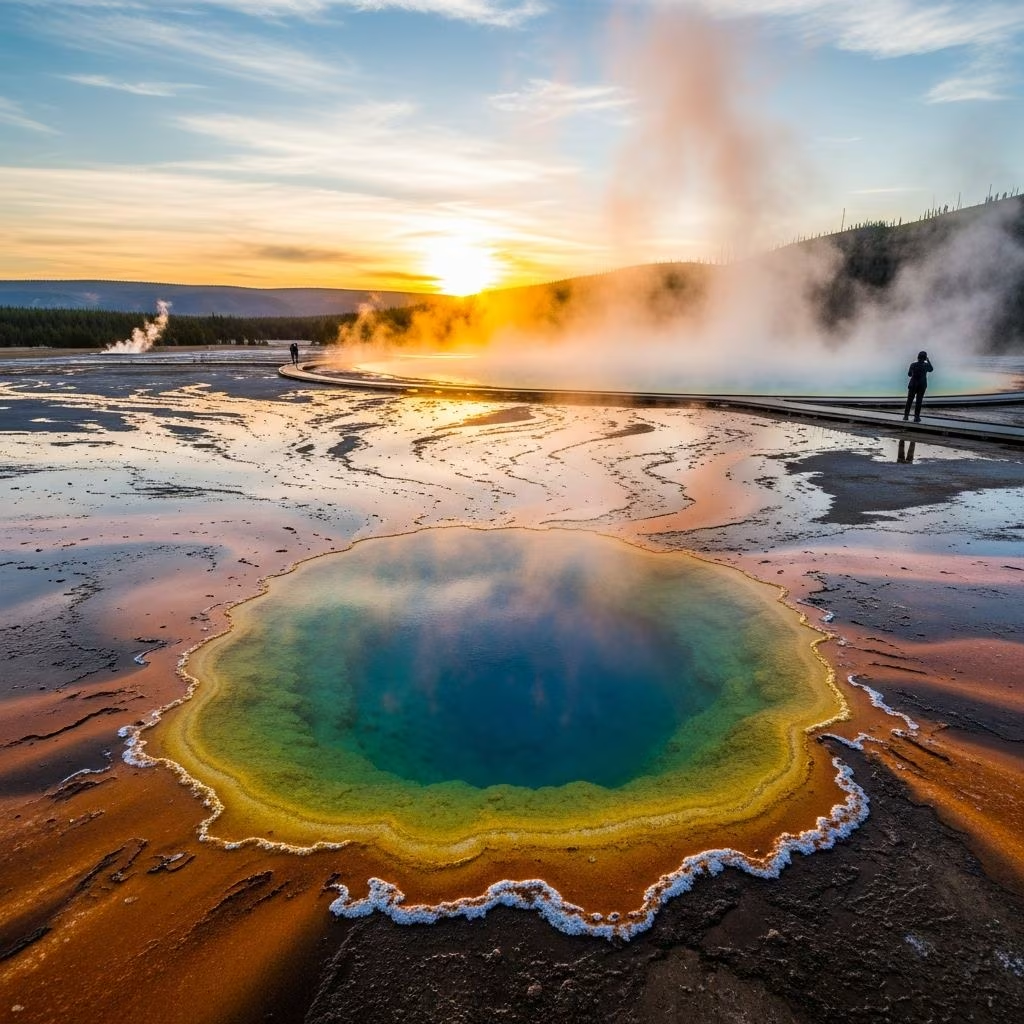
Yellowstone National Park captivates millions with its explosive geysers, steaming vents, and vibrant hot springs, but these geothermal marvels hide lethal risks. Burns from thermal features rank among the top causes of severe injuries and deaths, with more than 20 fatalities recorded from people entering or falling into scalding pools.
The park’s landscape appears inviting, yet the ground around hot springs often consists of a deceptive thin crust overlaying water hotter than 200°F (93°C). This fragile layer can shatter underfoot, plunging visitors into boiling depths that cause third-degree burns or worse. Even seemingly cool runoff streams carry enough heat to scald skin instantly, underscoring why contact with any thermal water is prohibited.
Yellowstone hosts over 10,000 geothermal sites, powered by the park’s active supervolcano. These features support unique extremophile life forms—algae, bacteria, and fungi adapted to extreme heat and acidity—but human interference destroys them irreversibly. Straying from paths not only endangers lives but disrupts centuries-old microbial mats essential to the ecosystem.
History is littered with harrowing tales from Yellowstone’s thermal areas. In July 2022, a 70-year-old man from California perished in the Abyss Pool at West Thumb Geyser Basin, his remains discovered weeks later in the 140°F (60°C) waters. Earlier, in 1890, a seven-year-old boy from Montana became one of the first recorded victims after falling into a hot spring.
More recent close calls include a six-year-old in 2006 who suffered severe burns from slipping off a boardwalk near Old Faithful’s West Triplet Geyser. Pets have also fallen victim; in 2021, a dog escaped a vehicle and leaped into a hot spring, leading to serious burns for its owner. These events highlight a persistent pattern: overconfidence or curiosity overrides warnings, resulting in irreversible harm.
To mitigate these risks, the National Park Service enforces strict guidelines. Here’s a breakdown of must-follow rules:
Boardwalks span miles around key sites like Old Faithful and Grand Prismatic Spring, channeling safe access while preserving delicate formations.
Beyond heat, Yellowstone’s hot springs harbor toxic chemicals and pathogens. The U.S. Geological Survey notes elevated arsenic levels and other toxins, alongside risks like E. coli and rare brain-eating amoebae such as Naegleria. Drinking or even inhaling steam exposes visitors to these dangers, explaining strict no-consumption policies.
| Hazard Type | Description | Risk Level |
|---|---|---|
| Thermal Burns | Water temps up to 250°F (121°C) | High – Fatal |
| Chemical Toxins | Arsenic, sulfur compounds | Medium – Long-term health |
| Microbial Pathogens | E. coli, Naegleria | High – Infection/Neurological |
| Crust Collapse | Thin layer over voids | High – Falls/Burns |
This table summarizes primary threats, emphasizing why sensory temptations must be ignored.
Despite entrance handouts and signage, some test boundaries. Rangers report fingers dipped into pools or selfies taken perilously close to edges. Summer crowds exceeding 4 million amplify oversight challenges, yet rules stem from proven lessons. Education combats complacency: hot tub comfort ends at 105°F (41°C), but park waters soar far higher.
Geothermal bacteria mats, visible as colorful terraces, thrive only in precise conditions. Footprints crush them, halting growth for decades. The park’s geology team monitors damage, retrieving lost items without retrieval risks and repairing disrupted areas. Visitors contribute by adhering to paths, preserving biodiversity found nowhere else.
Prepare by reviewing NPS resources before arrival. Wear sturdy shoes for boardwalks, keep distance from edges, and supervise children closely. Pets stay in vehicles or lodging outside thermal zones. In emergencies, alert rangers immediately—self-rescue attempts worsen outcomes.
Recent discoveries, like new blue springs, draw crowds but reinforce old cautions: admire from afar. With vigilance, Yellowstone’s wonders remain accessible without tragedy.
No, swimming in thermal waters is illegal and deadly, causing over 20 deaths.
No, it appears solid but hides scalding water under thin crusts.
Leave it—never enter to retrieve.
No, they are prohibited in thermal areas.
Absolutely not—toxins and pathogens make it hazardous.
Up to 250°F (121°C) or more.
Yellowstone’s half the world’s geysers draw awe, from predictable Old Faithful to cryptic mud pots. Safe exploration reveals rainbows in steam and palette-like pools. Respect boundaries to ensure future generations witness this dynamic geology.
Injury rarity amid millions of visitors speaks to effective rules, but each incident reminds: nature commands respect. Arm yourself with knowledge for an unforgettable, unharmed adventure.
