

 Travel Essentials
 Travel Essentials

Explore key facts about Yellowstone National Park: its vast size, volcanic geology, iconic geysers, diverse ecosystems, and visitor highlights in this comprehensive guide.
 Travel Essentials
Yellowstone National Park stands as a pinnacle of natural beauty and geological significance, established on March 1, 1872, as the world’s first national park. Spanning 2.2 million acres across Wyoming, Montana, and Idaho, it offers unparalleled access to hydrothermal wonders, thriving wildlife, and dramatic landscapes.
The park covers 3,468 square miles, larger than Rhode Island and Delaware combined, with 96% in Wyoming, 3% in Montana, and 1% in Idaho. Its terrain varies dramatically: 80% forests, 15% grasslands, and 5% water bodies, including rivers, lakes, and wetlands.
Yellowstone Lake, the park’s centerpiece, spans 131.7 square miles at 7,733 feet elevation, making it North America’s largest high-elevation lake with 141 miles of shoreline and an average depth of 138 feet.
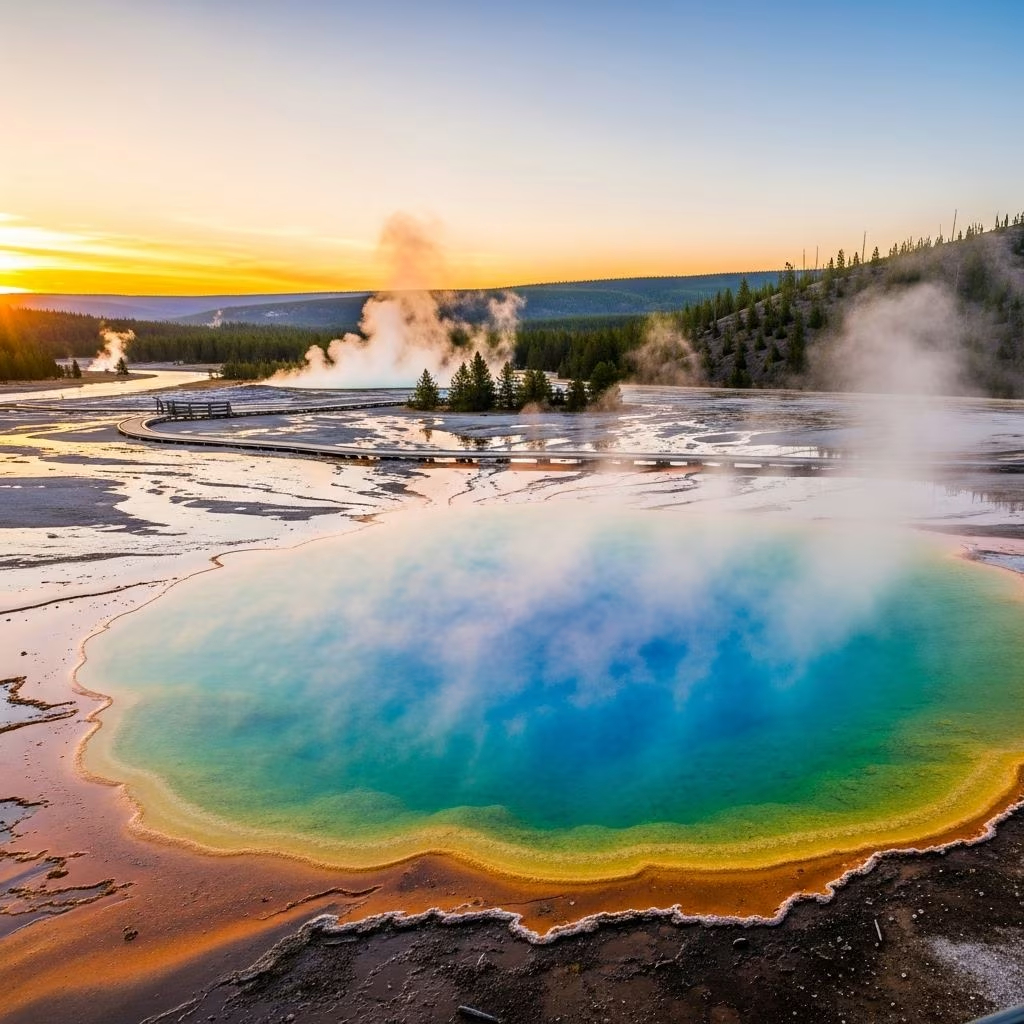
Situated atop an active supervolcano, Yellowstone features one of the world’s largest calderas, measuring 45 by 30 miles. This volcanic activity drives over 10,000 hydrothermal features, including more than 500 active geysers—half of the global total.
The park records 1,000 to 3,000 earthquakes annually, underscoring its dynamic geology. Lava flows and volcanic rocks dominate the landscape, with ancient petrified forests formed from ash burial.
| Feature | Details |
|---|---|
| Caldera Size | 45 x 30 miles (72 x 48 km) |
| Geysers | Over 500 active |
| Hydrothermal Sites | 10,000+ |
| Waterfalls | 290 (15+ feet high); Lower Falls: 308 feet |
Old Faithful, the park’s iconic geyser, erupts predictably every 90 minutes, shooting water up to 185 feet, drawing millions of visitors yearly.
Yellowstone anchors the Greater Yellowstone Ecosystem, the largest intact temperate ecosystem in the northern hemisphere, hosting megafauna like grizzly bears, wolves, bison, cougars, and elk.
It boasts America’s largest buffalo herd and diverse bird species. Subalpine forests dominate, part of the South Central Rockies ecoregion, supporting nine conifer species.
Before European arrival, 27 Native American tribes, including the Nez Perce, inhabited the area, leaving over 1,800 archeological sites and 300 ethnographic resources.
Designated a UNESCO World Heritage Site in 1978, Yellowstone features 25 National Register of Historic Places sites and the Nez Perce National Historic Trail.
Five entrances provide access via 392 miles of paved roads and 1,114 miles of hiking trails from 92 trailheads. Boardwalks span over 15 miles, with 13 self-guided trails for safe geothermal exploration.
Annually, millions visit to witness geothermal spectacles like the Grand Canyon of the Yellowstone and Lower Falls.
Elevations influence microclimates: summers reach 80°F daytime, dropping to freezing nights; winters plunge below zero with heavy snow. Precipitation averages 15-20 inches yearly, fueling rivers and springs.
Yellowstone Lake freezes in winter, supporting ice fishing, while summer blooms vibrant wildflowers.
Managed by the National Park Service since 1916, Yellowstone balances preservation with visitation. Wolf reintroduction in 1995 restored ecological balance, while ongoing monitoring tracks volcanic activity.
Challenges include overcrowding at hotspots and wildlife-human conflicts, addressed through education and regulations.
This 20-mile chasm, carved by the Yellowstone River, features 308-foot Lower Falls and colorful rhyolite walls, best viewed from Artist Point.
Norris Geyser Basin hosts the hottest features; Mammoth Hot Springs displays terraced travertine formations.
Prime wildlife viewing areas for bison, bears, and wolves in open valleys.
Enter via West Yellowstone for Old Faithful access or Northeast for Lamar Valley wildlife. Book lodges early; backcountry permits required for overnight hikes.
| Entrance | Key Attractions |
|---|---|
| West | Old Faithful, Geyser Basins |
| East | Yellowstone Lake, Canyon |
| North (Roosevelt) | Lamar Valley wildlife |
| South | Grand Teton proximity |
| Northeast | Cooke City access |
Its supervolcano, half the world’s geysers, and intact ecosystem set it apart.
Yes, with precautions: stay on boardwalks, maintain wildlife distance (100 yards for bears/wolves), and check weather.
Summer for accessibility; shoulder seasons (May, September) for fewer crowds; winter for snowcoach tours.
Over 4 million, peaking in July.
Water is frigid; swimming discouraged except designated areas.
Pets restricted to roadsides; not allowed on trails.
Climate change impacts snowpack and wildlife migration, prompting adaptive management. Visitor caps at peak times preserve resources.
Yellowstone’s legacy endures, inspiring global conservation as a living laboratory of earth’s forces.
