

 Travel Essentials
 Travel Essentials

Plan the perfect Yellowstone trip with top geysers, wildlife hotspots, safety tips, and a two-day itinerary for first-time visitors.
 Travel Essentials
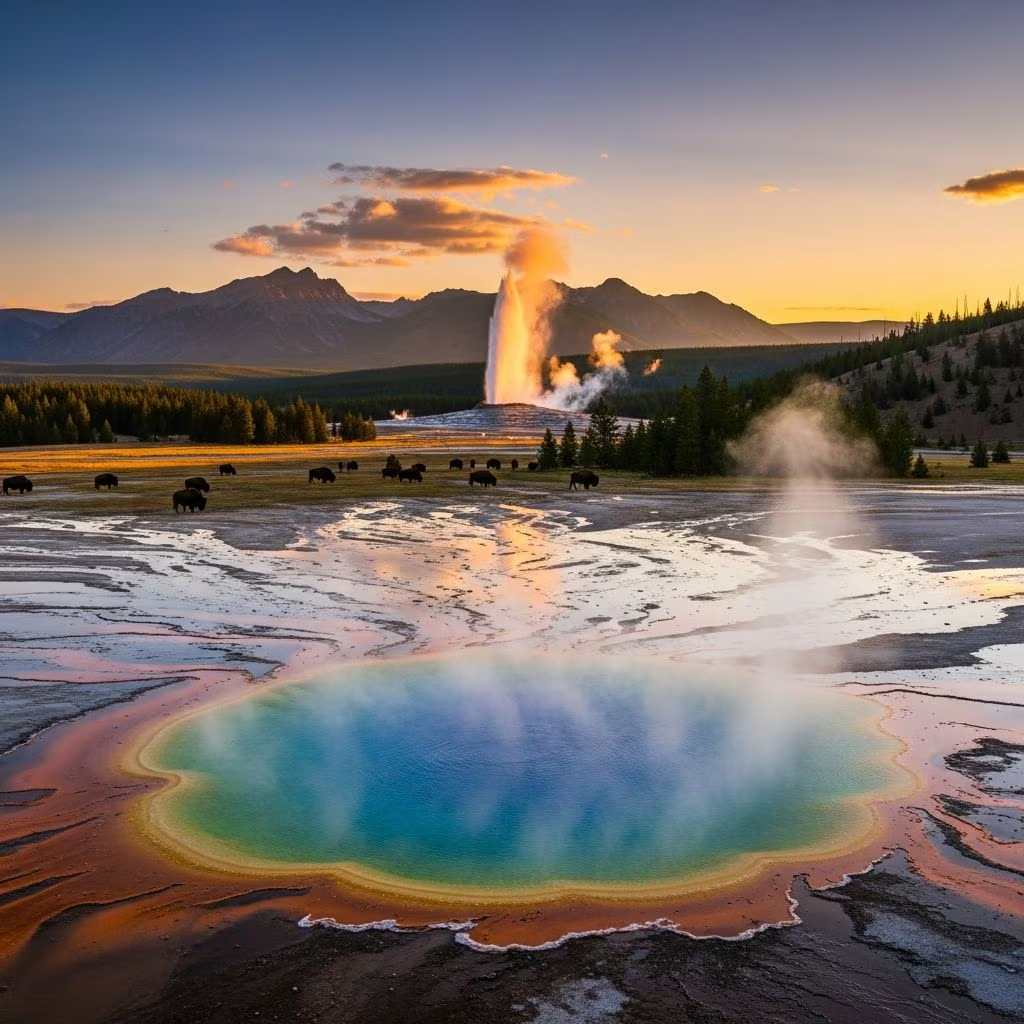
Yellowstone National Park spans over 2.2 million acres, offering a stunning array of geothermal features, diverse wildlife, and breathtaking landscapes. As the world’s first national park, it draws millions of visitors annually to witness its active geysers, vast lakes, and roaming herds of bison.
At the heart of Yellowstone lies a dynamic ecosystem shaped by volcanic activity, with more than 10,000 hydrothermal features including geysers, hot springs, and mud pots. The park’s Grand Loop Road forms a figure-eight pattern, connecting key sites and allowing access to remote valleys and basins. This 466-mile road system provides entry points from five directions, though winter closures require careful planning.
Visitors can expect everything from predictable eruptions at iconic geysers to unpredictable wildlife sightings. The park’s location primarily in Wyoming, with extensions into Montana and Idaho, makes gateway towns like Jackson and Cody ideal bases for exploration.
Timing your visit is crucial to avoid peak crowds. Arrive before 7 a.m. or after noon at entrances, and steer clear of major attractions between 10 a.m. and 4 p.m. during summer. The park’s vast size means drives between sites can take hours; the upper loop requires about two hours, while the lower loop takes two and a half.
| Day | Route and Highlights | Estimated Time |
|---|---|---|
| Day 1 | East Entrance to Yellowstone Lake, Old Faithful, Upper Geyser Basin, Grand Prismatic Spring, Norris Geyser Basin, Hayden Valley | Full Day |
| Day 2 | East Entrance to Lamar Valley, Tower Fall, Mammoth Hot Springs, West Entrance | Full Day |
This itinerary covers must-sees efficiently, adapting to road conditions.
The Upper Geyser Basin hosts the world’s highest concentration of active geysers, including Old Faithful, which erupts predictably every 90 minutes. Boardwalks guide visitors past Beehive Geyser, Castle Geyser, and colorful hot springs along the Firehole River. Nearby, Grand Prismatic Spring in the Midway Geyser Basin dazzles with its vibrant turquoise and orange hues, best viewed from the overlook trail.
Mammoth Hot Springs features terraced travertine formations fed by mineral-rich waters, creating otherworldly white and yellow platforms. Norris Geyser Basin offers steaming vents and acidic pools, while West Thumb Geyser Basin overlooks Yellowstone Lake’s shores. Always stay on designated paths to avoid scalding hazards.
Yellowstone boasts more free-roaming wildlife than nearly any U.S. continental site. Lamar Valley, dubbed America’s Serengeti, is prime for dawn sightings of bison, elk, wolves, bears, and eagles. Hayden Valley similarly teems with grazing herds. Early morning “Wake Up to Wildlife” tours maximize encounters with expert guides.
Maintain safe distances: 100 yards from bears and wolves, 25 yards from others. Dawn and dusk are optimal viewing times; bring binoculars and stay in vehicles near roadsides.
Hiking trails like Upper Geyser Basin and Elephant Back Mountain reveal intimate park views. Rent bikes at Old Faithful for a flat ride to Lone Star Geyser. Scenic cruises on Yellowstone Lake from Bridge Bay Marina offer 140 miles of shoreline exploration, fishing charters, or narrated tours aboard the MV Lake Queen II.
Stagecoach rides from Roosevelt Corral recreate 19th-century travel through Pleasant Valley meadows. Winter brings snowcoach, snowmobile, and cross-country skiing options. Nearby, rafting, horseback riding, and hot springs soaks in Gardiner or West Yellowstone enhance experiences.
| Activity | Best For | Season | Duration |
|---|---|---|---|
| Boat Cruise | Lake Views | Summer | 1-2 Hours |
| Wildlife Tour | Animal Spotting | All | Dawn |
| Stagecoach Ride | History | Summer | 45 Min |
| Hiking | Scenery | All | Varies |
Yellowstone’s beauty demands respect. Hike in groups of three or more, carry bear spray, and watch for tracks or scat. Never feed animals, approach wildlife too closely, or leave trails near thermal areas.
Bear encounters require standing ground; back away slowly. Thermal waters can burn severely—supervise children closely.
Lodging inside the park includes historic lodges near Old Faithful and Mammoth. Campgrounds offer sites amid scenery. Gateway towns provide diverse stays, from cabins to resorts. Dining ranges from park cafeterias to chuckwagon dinners in West Yellowstone.
Summer buzzes with activity, but fall colors and fewer crowds appeal. Winter limits roads to guided snowmobile tours, revealing snow-covered geysers. Spring brings calving season in valleys.
Capture golden-hour wildlife and steaming geysers. Pack layers for variable weather, sturdy shoes, water, snacks, and sun protection. A wide-angle lens excels for landscapes; telephoto for animals.
The full figure-eight loop takes 4-7 hours without stops; plan days for attractions.
Yes, with precautions like group hiking and wildlife distances.
Early morning or late afternoon; shoulder seasons like May or September.
Absolutely—wildlife safaris, boat trips, and ranger programs enhance visits.
Yes, bike rentals at Old Faithful and boat rentals at Bridge Bay.
Leave no trace: pack out trash, respect closures, and support conservation. Your mindful visit ensures this geothermal paradise endures.
