

 Travel Essentials
 Travel Essentials

Explore critical errors visitors make in Yellowstone National Park, from wildlife encounters to thermal hazards, with tips for safer exploration.
 Travel Essentials
Yellowstone National Park captivates millions with its explosive geysers, roaming wildlife, and dramatic landscapes, but hidden dangers lurk for the unprepared. Common missteps can turn a dream trip into a nightmare of fines, injuries, or worse. This guide highlights key errors to sidestep, drawing from official advice and seasoned insights to ensure your visit prioritizes safety and wonder.
One of the biggest oversights is hitting popular spots during peak hours without a strategy. Arriving after 7 a.m. or before noon at entrances often means battling massive crowds, especially from 10 a.m. to 4 p.m. when families swarm Old Faithful and other icons. Instead, enter early or late to claim serene views of geysers erupting amid fewer onlookers.
Overpacking your itinerary exacerbates this. The park’s figure-eight Grand Loop Road spans vast distances—two hours for the upper loop, 2.5 for the lower—slowed by bison jams, construction, or curves. Rushing to “see it all” leads to exhaustion and missed intimate moments, like dawn wildlife spotting in Hayden Valley. Slow down; even locals with decades of visits haven’t covered everything.
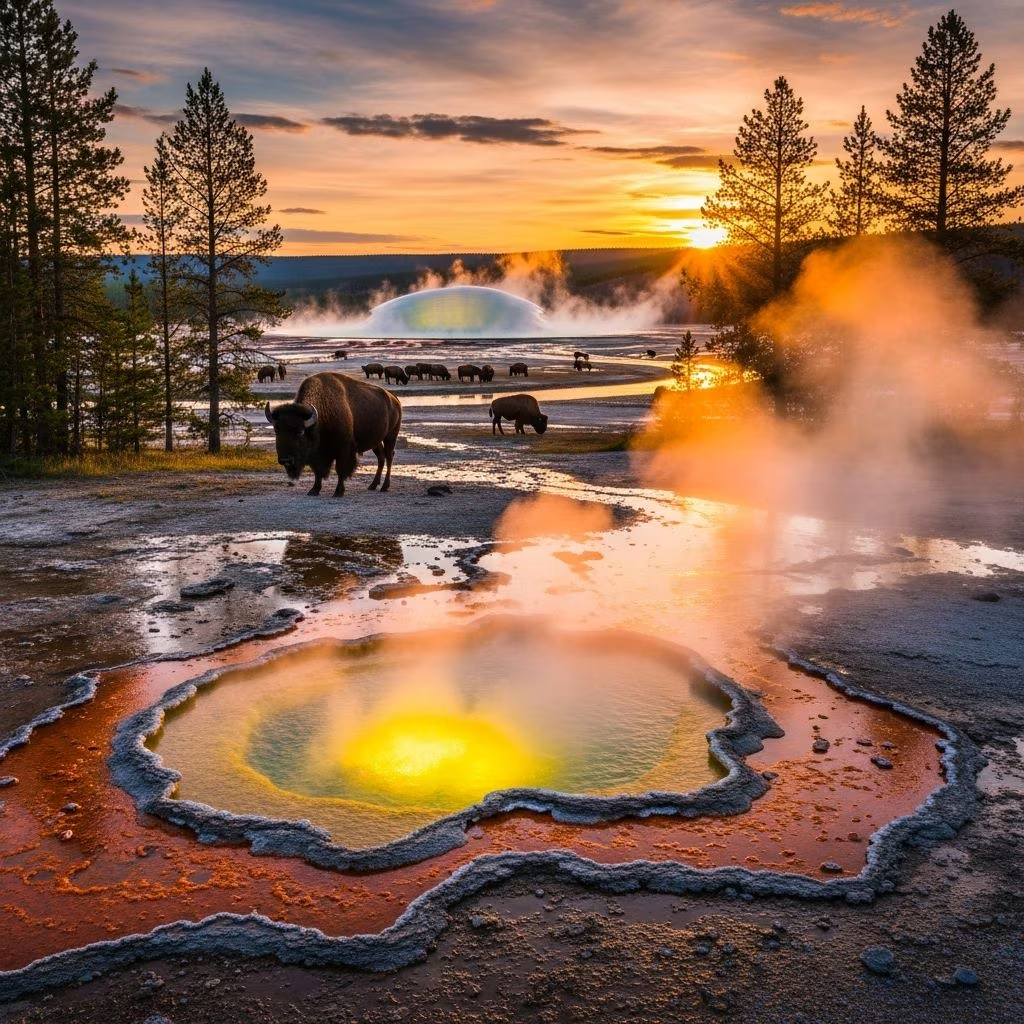
Yellowstone teems with bison, bears, elk, and more, but treating them like zoo exhibits spells disaster. Approaching within 25 yards of bison or elk—or 100 yards of bears and wolves—risks aggressive charges; these animals injure more visitors than predators. Bison jams clog roads; always yield right-of-way and use pullouts.
Skipping bear spray on hikes is reckless—98% of the park lies off-road, where encounters spike. Spray it like mace, practice drawing it, and hike in groups. Dusk wildlife viewing amps excitement but demands vigilance; intoxicated driving near animals courts severe penalties.
The park’s 10,000+ thermal features, including scalding springs over 200°F, claim lives yearly from falls or strays off boardwalks. Stepping beyond paths for selfies has led to third-degree burns and deaths; brittle crusts hide boiling mud.
Boardwalks protect you and fragile ecosystems—stick to them religiously. Supervise children and pets tightly; scalding water lurks inches away. Recent incidents underscore this: a child wandering off-path suffered severe injuries, prompting ranger warnings.
| Thermal Hazard | Safe Distance | Consequences of Ignoring |
|---|---|---|
| Geysers (e.g., Old Faithful) | Stay on boardwalk | Ejections of 100-180°F water, burns |
| Hot Springs | Do not approach edges | Scalds, drowning in superheated pools |
| Fumaroles/Mud Pots | Observe from paths | Acid burns, collapses into boiling mud |
Many skip hikes, missing 98% of the park’s beauty visible only on trails. Short 0.5-mile jaunts reveal hidden waterfalls and wildlife sans crowds. But venturing unprepared—sans water, layers, or spray—invites dehydration, hypothermia, or maulings.
High elevation means intense sun and rapid weather shifts; even summer nights dip near freezing. Pack layers, rain gear, sunscreen, hats, and ample water/snacks for traffic jams. No fancy boots needed for most paths, but sturdy shoes prevent slips.
Low speed limits, curves, and animal crossings make roads treacherous. Tailgating or speeding through bison herds causes accidents; pull over fully at pullouts to let traffic flow. Drones are banned park-wide, drawing $1,200 fines for disturbing wildlife.
Enter via the best gate for your origin—west or south for most, but plan ahead as lines snake miles. Gas up outside; park fuel is pricey and sparse. Drive sober always—zero tolerance near wildlife.
Booking late means no in-park stays, forcing long commutes that eat prime hours. Reserve lodges like Old Faithful Inn—a historic gem—a year ahead. Staying inside lets you catch early eruptions or late wildlife after day-trippers leave.
Picnic over restaurant lines; pack takeout for flexibility amid crowds. Trash goes in bear-proof bins only—no littering, as it attracts predators. Visitor centers offer maps, exhibits, and kid activities—don’t bypass them.
Yellowstone’s microclimates demand versatility: 80°F days to freezing nights, sudden storms. Layers are non-negotiable; forget them, and hypothermia looms. Sun protection is crucial at altitude—sunscreen, hats for endless boardwalks.
Winter adds snowmobiles or skis, but summer layers suffice year-round. Patience packs light but essential: crowds test tempers.
Litter, off-trail wandering, or feeding animals erodes this treasure. Short-term gains like rogue photos yield long-term damage—trampled bacteria mats take centuries to regrow. Drones scare wildlife into stress; bans protect all.
Leave no trace: pack out all waste, stay on durable surfaces. This sustains Yellowstone for generations.
Before 7 a.m. to beat crowds, especially peak season.
Highly recommended; carry and know how to use it on all off-road trails.
Not advised—traffic and size make it exhausting; split over days.
Use pullouts, give space; they have right-of-way.
No, prohibited to protect wildlife and visitors.
Day 1: Early west entrance to Upper Geyser Basin, hike Observation Point, visitor center. Afternoon: Yellowstone Lake cruise. Day 2: Hayden Valley dawn wildlife, trails off Grand Loop. Stay in-park for flexibility.
This blueprint dodges pitfalls, maximizing awe. Yellowstone rewards the prepared—respect its power for memories that last.
