

 Travel Essentials
 Travel Essentials

Discover vital tips for exploring Yellowstone National Park: master peak season timing, wildlife safety protocols, hiking essentials, lodging choices, and geothermal precautions for a seamless trip.
 Travel Essentials
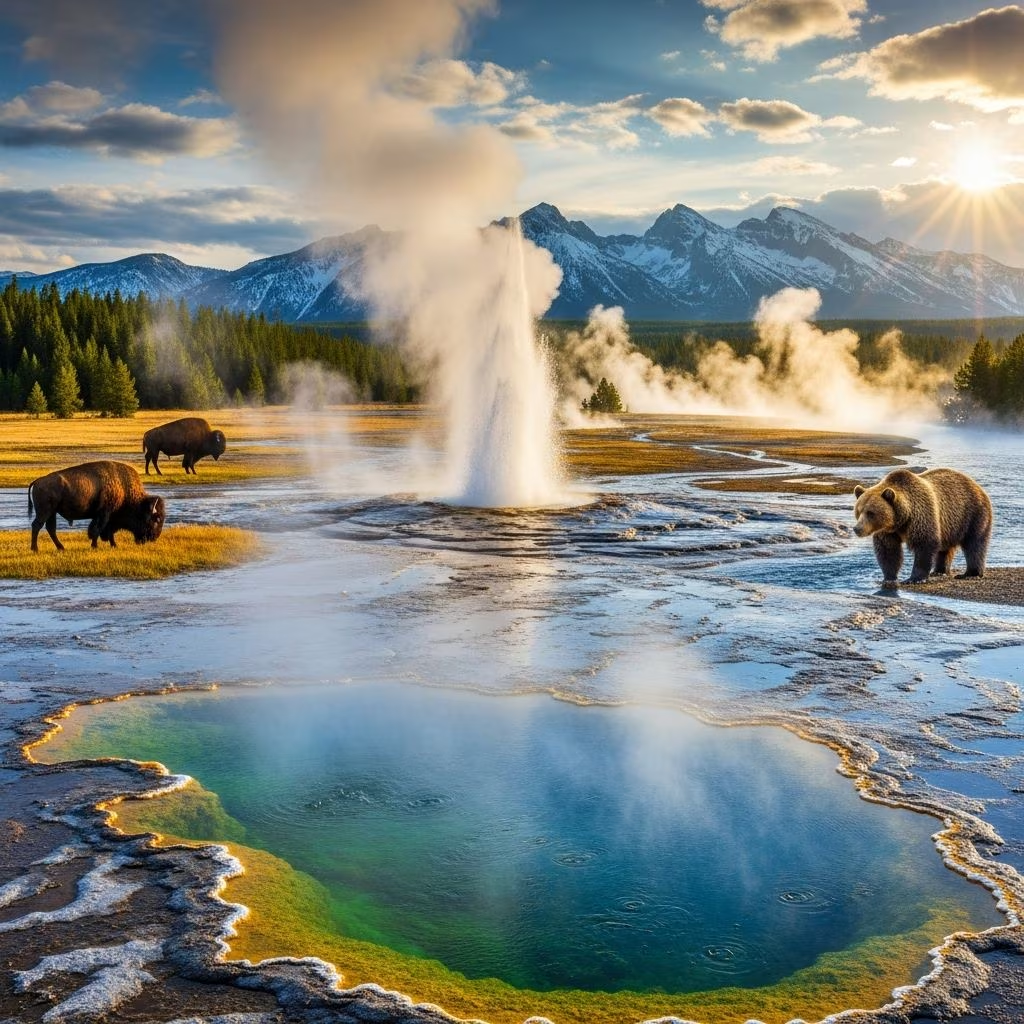
Yellowstone National Park stands as one of America’s premier natural wonders, boasting geothermal features, diverse wildlife, and breathtaking landscapes. To fully appreciate its majesty, visitors must prepare thoughtfully, respecting both the environment and park regulations. This guide draws from official advisories and seasoned insights to equip you with practical knowledge for a rewarding experience.
Achieving a serene visit requires smart scheduling around peak visitor hours. Summer months draw massive crowds, overwhelming popular sites like Old Faithful. Arrive at entrances before 7 a.m. or after noon to bypass the rush, and steer clear of main attractions between 10 a.m. and 4 p.m.
Early mornings or late afternoons offer prime opportunities for iconic sights. For instance, witness Old Faithful’s eruption with fewer onlookers by arriving at dawn or dusk, enhancing the intimate feel of the Upper Geyser Basin. Hiking trails during these off-peak windows reveals quieter paths teeming with natural beauty.
Wildlife activity peaks at dawn and dusk, making these times ideal for observation in areas like Hayden or Lamar Valley. Plan outings accordingly to spot bison, elk, or bears without vehicular congestion.
Yellowstone hosts thriving populations of bison, elk, bears, wolves, and more, but close approaches pose serious risks. Maintain minimum distances: 25 yards from bison and elk, 100 yards from bears and wolves. Use designated pullouts for viewing, never stopping in roadways, to prevent traffic jams known as ‘bison jams’.
Bears demand extra caution on hikes; travel in groups of three or more, carry bear spray, and know its deployment. Dawn and dusk heighten sighting chances in valleys rich with grazing herds. A telephoto lens (200-300mm) aids safe photography without violating regulations.
| Animal | Minimum Distance | Best Viewing Spots |
|---|---|---|
| Bison/Elk | 25 yards (23 meters) | Hayden Valley, Lamar Valley |
| Bears/Wolves | 100 yards (91 meters) | Remote trails, valleys at dawn/dusk |
| Bighorn Sheep | 25 yards | Cliffy trailsides |
Responsible driving includes obeying speed limits and yielding to animals, who always have right-of-way. Park fully off pavement with all tires right of the white line.
The park’s thermal basins feature scalding springs and fragile crusts that have caused severe injuries. Stick strictly to boardwalks and trails; venturing off can lead to falls through thin ground into boiling waters.
Boardwalks protect both visitors and delicate ecosystems. In geyser areas, observe eruptions from safe vantage points, like trails overlooking Old Faithful. Visitor centers provide maps highlighting stable paths amid volatile terrain.
Ninety-eight percent of Yellowstone lies off roadways, accessible only by foot. Short hikes—half-mile boardwalks or longer trails—immerse you in forests, waterfalls, and secluded lakes. No fancy gear needed for most day hikes; sturdy shoes, water, and awareness suffice.
Pack layers, rain protection, sunblock, hats, snacks, and ample water. High elevation means intense sun and rapid weather shifts, even in summer when nights dip near freezing.
Ranger-led walks at visitor centers offer educational depth on local flora, fauna, and geology. Evening programs cap days with storytelling under stars.
Staying inside Yellowstone maximizes time, allowing pre-dawn starts and late explorations post-day-tripper exodus. Historic gems like Old Faithful Inn or Lake Yellowstone Hotel blend rustic charm with comfort; their lobbies awe with soaring ceilings and massive fireplaces.
Book lodges or campsites a year ahead for peak season. Picnics and takeout minimize restaurant queues; pack bear-proof containers for trash and food storage.
Visitor centers stock maps and intel tailored to regions, from geyser basins to lake shores.
Versatile attire handles microclimates: layers for 80°F days and near-freezing nights, rain gear for sudden storms. Essentials include:
Avoid common pitfalls: no drones, littering, roadside waste, or feeding wildlife. Hike sober, store food securely.
| Day | Morning | Afternoon | Evening |
|---|---|---|---|
| 1 | Early Old Faithful + geyser basin | Grand Prismatic Spring boardwalk | Wildlife watch in Hayden Valley |
| 2 | Lamar Valley dawn patrol | Yellowstone Lake boat/岸 | Visitor center ranger talk |
| 3 | Short hike to waterfall | Mammoth Hot Springs | Old Faithful Inn lobby + ice cream |
Peak season (June-August) offers full services but crowds; shoulders (May, September) balance weather and visitors. Winter suits snow enthusiasts with guided tours.
Essential for backcountry; recommended for trails over half-mile. Rentals available at park stores; learn usage via ranger demos.
Yes, but check road grades and pullout sizes. Obey 45 mph limits; no RVs on some trailside stops.
No for sights, but lodges, boats, and tours book early—up to a year ahead.
Slowly proceed; use pullouts only if safe. Never approach or honk.
Leave no trace: pack out trash, stay on paths, respect closures. Your mindfulness sustains this geothermal powerhouse and wildlife haven. Patience amid lines and jams enhances the journey.
