

 Travel Essentials
 Travel Essentials

Explore Yogyakarta, Indonesia's cultural epicenter, featuring the Kraton palace, Ramayana ballet, shadow puppets, street art, and nearby UNESCO temples like Borobudur and Prambanan.
 Travel Essentials
Yogyakarta stands as Indonesia’s premier hub for Javanese traditions, blending ancient rituals with contemporary creativity in a city that pulses with artistic energy. Nestled on Java island, this destination captivates with its royal legacy, sacred performances, and monumental temples, offering travelers an immersive dive into a heritage shaped over centuries.
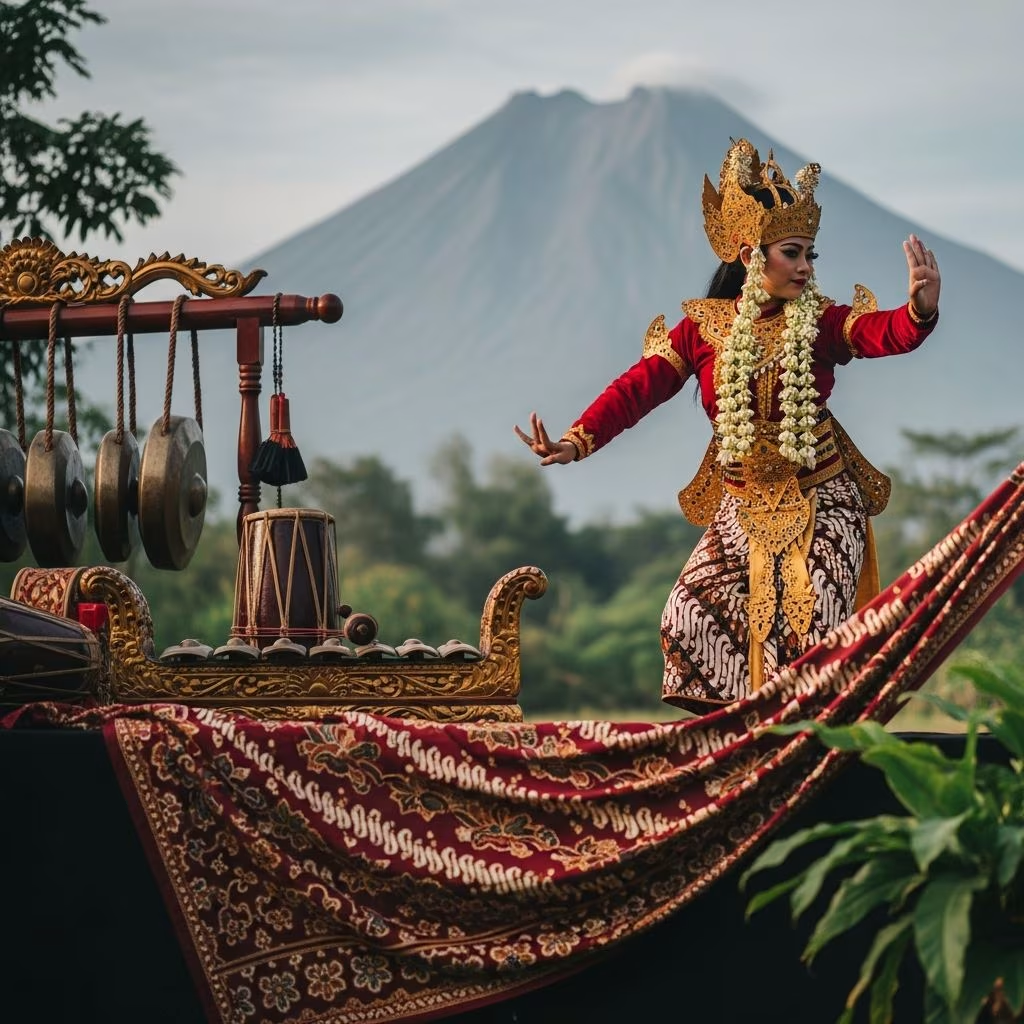
The city’s identity revolves around its deep-rooted history, particularly the Kraton, or Sultan’s Palace, a sprawling fortified enclave that serves as both a living museum and the monarch’s home. Constructed in the 18th century, this architectural marvel exemplifies Javanese design with its open courtyards, ornate pavilions, and intricate wood carvings. Daily life here intertwines tradition and modernity; visitors witness royal guards in ceremonial attire, gamelan ensembles practicing rhythmic percussion, and classical dance rehearsals unfolding in shaded halls.
Beyond its aesthetic appeal, the Kraton embodies political continuity, as Yogyakarta remains the only Indonesian region governed by a sultanate. This unique status fosters a sense of timeless authority amid national democracy. Mornings bring free cultural displays, including dance and music, allowing outsiders to glimpse the palace’s inner workings without intrusion.
Yogyakarta’s proximity to world-renowned temples elevates its status as a cultural gateway. Borobudur, a 9th-century Buddhist marvel just an hour away, features nine stacked platforms adorned with over 2,600 relief panels depicting Buddha’s life and cosmic journeys. As a UNESCO World Heritage Site, it draws pilgrims and tourists for sunrise vistas and meditative stupa explorations.
Equally impressive is Prambanan, Indonesia’s grandest Hindu complex, comprising 240 shrines dedicated to deities like Shiva. Towering at 47 meters, its main spire symbolizes divine power through detailed bas-reliefs from the Ramayana epic. Evening visits coincide with cultural shows, merging history with live storytelling.
| Temple | Key Features | Distance from Yogyakarta | UNESCO Status |
|---|---|---|---|
| Borobudur | Buddhist stupas, relief carvings | ~40 km north | Yes (1991) |
| Prambanan | Hindu shrines, Ramayana sculptures | ~17 km east | Yes (1991) |
Live performances form the heartbeat of Yogyakarta’s cultural calendar. The Ramayana ballet, staged against Prambanan’s silhouetted temples, reenacts the Hindu epic with hundreds of dancers in vibrant costumes, accompanied by gamelan orchestras and fiery effects. This open-air spectacle, held seasonally, transforms myth into mesmerizing theater.
Wayang kulit, or shadow puppetry, offers intimate evenings of narration drawn from Mahabharata tales. Skilled dalang puppeteers manipulate leather figures behind a lit screen, voicing characters and syncing with gamelan beats. Venues like Sonobudoyo Museum host near-nightly shows, preserving this intricate oral tradition.
Yogyakarta thrives as a workshop for time-honored crafts. Batik, the wax-resist dyeing technique yielding intricate patterns, flourishes in areas like Kota Gede. Artisans demonstrate cloth preparation, canting tool application, and color immersion, often inviting participation.
Batik motifs range from parang (knife-like waves symbolizing strength) to kawung (palm motifs for purity), each carrying philosophical depth. Silverwork in the same district produces filigree jewelry, while puppet carving sustains wayang kulit supplies. These hands-on experiences reveal the labor-intensive pride behind everyday Javanese artistry.
Amid historical reverence, Yogyakarta pulses with youthful expression through graffiti and murals. Streets around Malioboro and the Kraton feature bold walls critiquing society, celebrating heroes, or abstractly interpreting Javanese motifs. This street art scene, born from student activism, contrasts ancient icons with spray-paint vibrancy, inviting wanderers to decode messages on power, environment, and identity.
Malioboro Boulevard, the commercial spine, buzzes with vendors, becak carriages, and evening markets. It’s prime for spotting murals while sampling gudeg (jackfruit stew) or bakpia pastries from street stalls.
Food mirrors cultural fusion. Gudeg, slow-cooked young jackfruit with coconut milk, spices, and eggs, epitomizes Javanese sweetness. Street eats include sate klathak (grilled goat on minimal skewers) and wedang ronde (ginger tea with glutinous balls).
Dine at raminten houses for theatrical service in sarong attire, or modern cafes blending local flavors with global twists. Chocolate workshops introduce cacao processing, tying into Java’s colonial plantation past.
Religious tolerance defines Yogyakarta, where Hindu epics coexist with Islamic practices and ancient animism echoes. Festivals like Sekaten mark the Prophet’s birth with gamelan processions, while diverse shrines dot the landscape.
Student energy from universities infuses intellectual buzz, spawning galleries, poetry slams, and debates. This blend sustains Yogyakarta’s nickname as Java’s intellectual cradle.
The Kraton is renowned as the residence of Yogyakarta’s sultan and a venue for daily traditional performances like gamelan and dance.
Absolutely; the temple’s scale and serenity make it a highlight, best at dawn to avoid crowds.
Performances occur May-October, nightly at Prambanan, with dinner packages available.
Yes, batik, puppet-making, and silver crafting sessions abound in Kota Gede and village tours.
Highly; Malioboro and Kraton areas are pedestrian-friendly, with art everywhere.
Combine palace visits with temple excursions and evening shows for a full spectrum. Respect customs by dressing modestly at sacred sites and supporting local artisans. Yogyakarta rewards patient explorers with profound connections to Java’s enduring spirit.
