

 Travel Essentials
 Travel Essentials

Yosemite’s climbing boom is leaving litter, waste, and erosion behind. Here’s how stewardship efforts are trying to protect the park.
 Travel Essentials
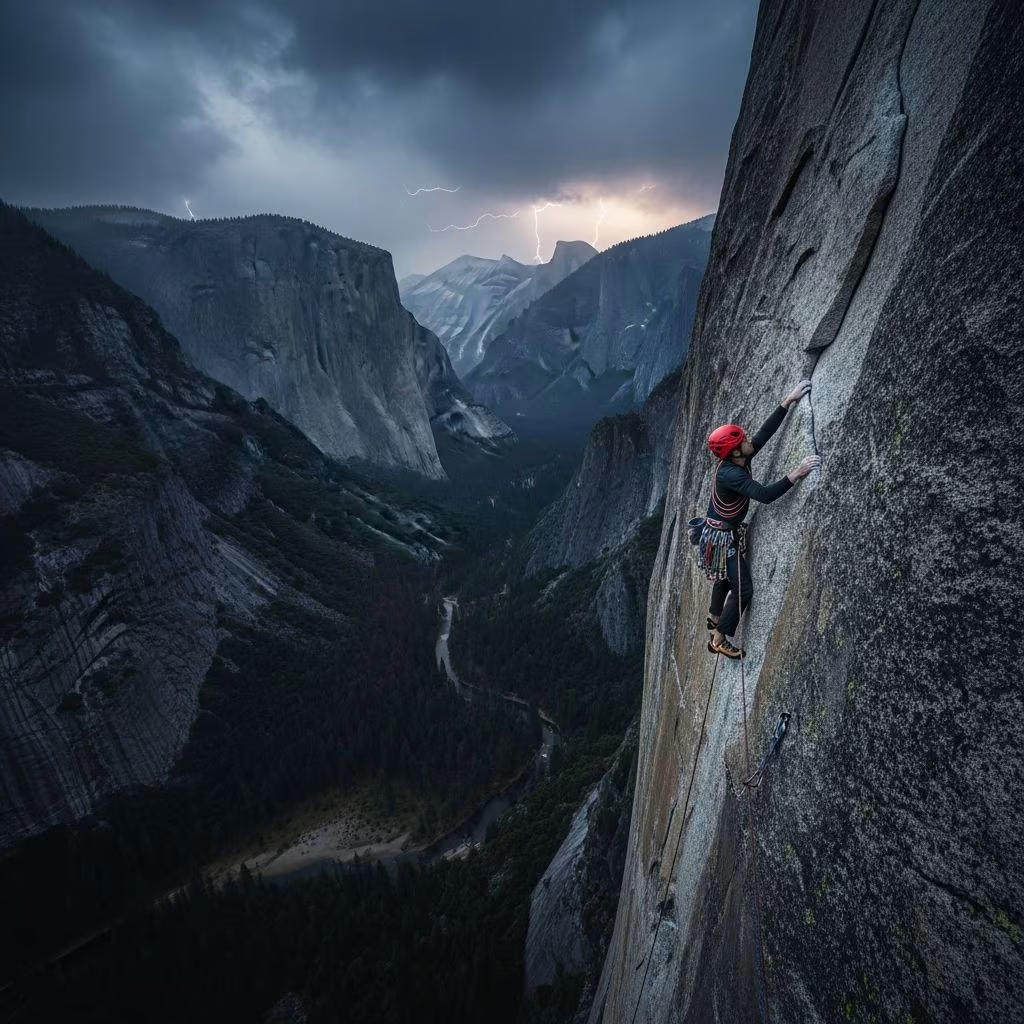
Iconic granite monoliths like El Capitan draw thousands of climbers annually to Yosemite National Park, but this popularity is eroding the very wilderness that attracts them. Surging visitor numbers have led to widespread litter, human waste accumulation, vegetation damage, and informal trails scarring the landscape around big walls.
Yosemite’s climbing scene has exploded in recent decades. From around 800,000 climbers in 2000, the number has climbed to over 1 million today, fueled by social media, accessible gear, and the rise of bouldering. Big walls like El Capitan, designated as wilderness in 1984, now host multi-day ascents that amplify impacts through overnight stays, fixed gear, and discarded waste.
This growth brings inexperienced participants, increasing accidents and environmental strain. Informal paths form as climbers access routes, leading to soil erosion and plant loss. Bouldering, popular for its low barrier to entry, concentrates activity at cliff bases, crushing vegetation with crash pads and scattering micro-trash like tape and bottle caps.
The cumulative effects of big wall climbing severely degrade wilderness values. Key issues include:
These problems threaten Yosemite’s UNESCO World Heritage status, recognized for its glaciation features and natural beauty. Climate change compounds issues, with warming temperatures (projected 6.7–10.3°F rise by 2100) reducing snowpack and stressing ecosystems already pressured by human activity.
Yosemite National Park counters these challenges through targeted programs. The Climbing Stewardship Program, supported by Yosemite Conservancy, focuses on education, restoration, and research.
The Overnight Big Wall Climbing Wilderness Stewardship project aims to protect natural conditions by curbing litter, waste, and structures while preserving climbing access. Rangers promote “poop tubes”—sealed containers for waste haul-off—and piss bottles to prevent runoff.
| Impact Area | Stewardship Measure | Expected Outcome |
|---|---|---|
| Human Waste | Poop tubes and education | Cleaner walls and water |
| Trails | Restoration and formal paths | Reduced erosion |
| Litter | Patrols and fines | Zero trash policy |
| Bouldering Bases | Crash pad guidelines | Protected vegetation |
Climbing in Yosemite dates back to the 19th century, with early ascents by pioneers on foot or horse. Protection efforts culminated in national park status in 1890, safeguarding against exploitation. Big walls gained wilderness designation in 1984, mandating natural preservation alongside climbing freedom.
Ethics have shifted: “clean climbing” avoids pitons that damage rock, favoring removable gear. Route preservation now emphasizes environmental integrity, urging climbers to stick to established lines rather than “gardening” new ones, which harms lichen—a key rock lifeform.
Policies balance access and protection. Bolting requires oversight, with interagency guidelines pending. Bans on new fixed anchors in wilderness areas enforce minimal impact. Food storage rules prevent bear conflicts, as climbers’ unattended snacks draw wildlife.
Resource-strapped managers struggle with enforcement amid rising crowds. Accidents from inexperience add rescue burdens, diverting staff from conservation.
Individuals drive change. Essential guidelines include:
Innovations like waste-hauling drums show progress, but widespread adoption is needed.
Without action, Yosemite risks losing its allure. Projections of continued climber growth demand proactive measures: expanded education, permit systems for big walls, and tech like biodegradable chalk. Collaborative efforts with the climbing community foster stewardship over regulation.
Climate pressures—glacier loss, droughts, tree die-offs—underscore urgency. Climbers must lead, embodying Leave No Trace to ensure El Capitan remains pristine for generations.
Litter, human waste, erosion, and vegetation damage from high traffic and overnight stays.
Strongly recommended for big walls; throwing waste is illegal and hazardous.
From 800,000 in 2000 to 1 million+ today, straining resources.
An initiative for trail restoration, education, and impact prevention.
Discouraged to protect lichen and environment; use established routes.
