

 Travel Essentials
 Travel Essentials

Explore Yosemite's iconic Firefall phenomenon, its rich history, optimal viewing spots, and essential tips for witnessing this natural wonder in 2026.
 Travel Essentials
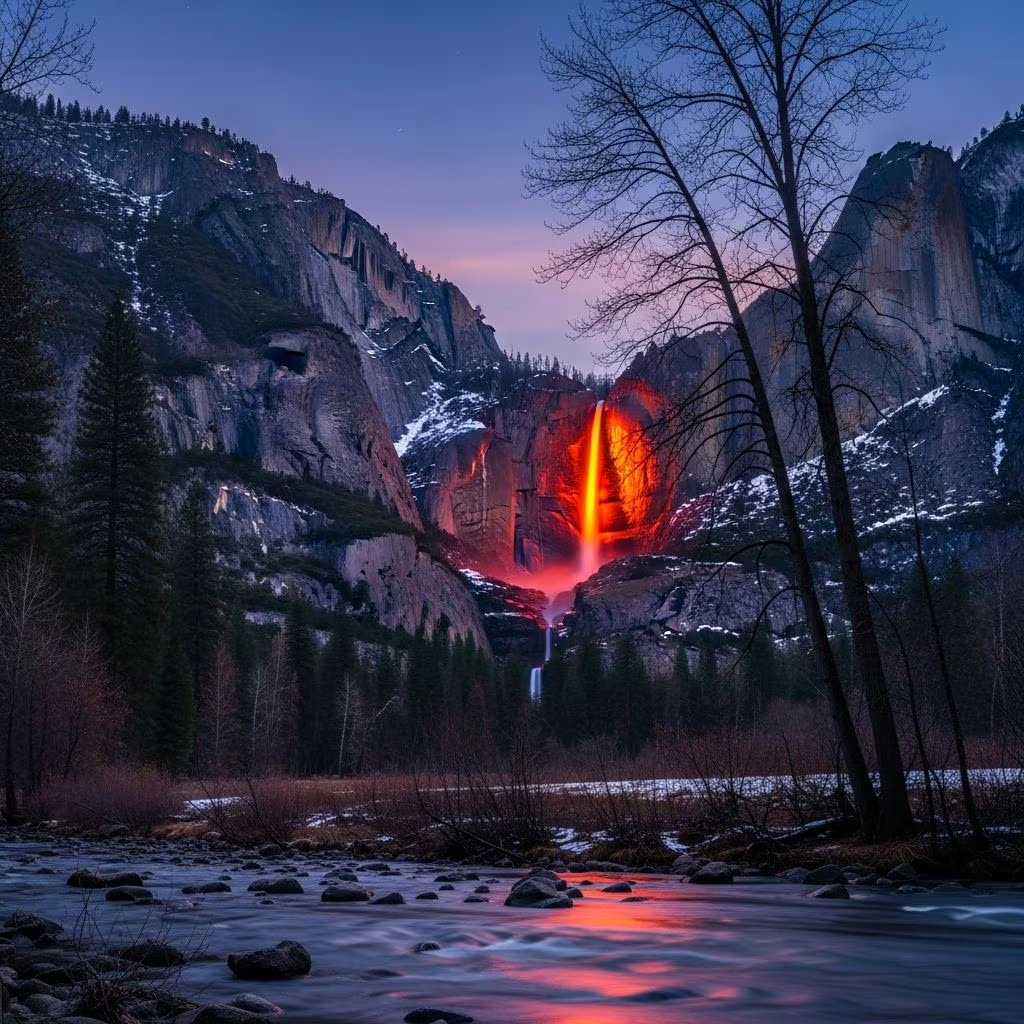
The Yosemite Firefall captivates visitors with its ethereal glow, transforming a waterfall into a river of fire against the twilight sky. This natural spectacle at Horsetail Fall has become one of the park’s most sought-after events, drawing thousands annually.
Yosemite’s Firefall story begins in the late 19th century, rooted in human ingenuity rather than pure nature. Pioneers at Glacier Point, seeking to entertain early tourists, initiated a tradition of pushing burning embers over the cliff’s edge. This man-made display, starting around 1872, lit up the night sky, simulating a cascading waterfall of fire that plummeted 3,000 feet to the valley floor below.
James McCauley, an immigrant trailblazer, is credited with popularizing this spectacle. To amuse guests at the Mountain House Hotel, he constructed fires near the precipice and, at 9 p.m. each summer evening, shoved the glowing coals over the edge. The resounding call of ‘Let the fire fall!’ echoed through the valley, signaling the start of the show. Crowds gathered, mesmerized by the fiery stream that appeared to flow endlessly.
This practice persisted intermittently until 1968, when National Park Service Director George Hartzog halted it. Concerns over environmental damage—trampled meadows, scarce red fir bark for fuel, and fire risks—outweighed the entertainment value. By the mid-20th century, thousands flocked to Yosemite solely for this event, underscoring its cultural impact.
The shift to a genuine natural phenomenon occurred serendipitously in 1973. Renowned mountaineer and photographer Galen Rowell, driving through Yosemite Valley, glanced upward to see Horsetail Fall bathed in the setting sun’s alpenglow. The thin ribbon of water off El Capitan’s eastern flank glowed an intense orange-red, mimicking the old ember fall without any human intervention.
Rowell’s photograph marked the first widely shared image of this occurrence, igniting global interest. Horsetail Fall, fed by seasonal snowmelt, only flows reliably in winter and early spring. When conditions align—clear skies, sufficient water flow, and precise sunset alignment—the waterfall ignites in fiery hues for mere minutes.
For the natural Firefall to manifest, several elements must converge. Water flow in Horsetail Fall peaks from mid-February to early March, dependent on recent snowfall and mild temperatures. The sun must set without obstruction, illuminating the fall at exactly the right angle—typically 4:30 to 5:30 p.m. PST.
Cloud cover or strong winds can snuff out the show, while too much water creates a white cascade that diffuses the glow. Park rangers monitor forecasts daily; check the official Yosemite NPS website or app for real-time updates on ‘firefall potential.’ In peak years, the display lasts 5-10 minutes, building to a crescendo as the sun dips behind the horizon.
Securing the best vantage point requires planning amid crowds of up to 4,000 eager spectators. Here are top spots, ranked by accessibility and view quality:
A table comparing these locations:
| Location | Distance to Fall | Accessibility | Crowd Level | Best For |
|---|---|---|---|---|
| Glacier Point Apron | 3 miles | Shuttle/hike | High | Panoramic views |
| Four Mile Trailhead | 1.5 miles | Drive/hike | Medium-High | Photography |
| Southside Drive | 1 mile | Drive | Medium | Easy access |
| Curry Village | 0.5 miles | Walk | High | Families |
| El Capitan Meadow | 2 miles | Hike | Low | Solitude |
Yosemite enforces peak-hour reservations from mid-February to mid-March (7 a.m.-4 p.m.). Book via recreation.gov up to three months ahead; entry peaks at $35/vehicle. Overnight stays inside the park require lodging reservations a year in advance—opt for Housekeeping Camp or Curry Village for proximity.
Arrive by 1 p.m. for prime spots. Pack layers, snacks, and portable chairs. Leave no trace: pack out waste amid fragile meadows.
Capture the Firefall with these pro techniques:
For non-photographers, binoculars magnify the magic. Silence phones; the valley’s hush amplifies the spectacle.
Winter conditions demand vigilance: icy trails, sudden storms, wildlife encounters. Stick to paths, inform rangers of plans. Hypothermia risks rise post-sunset—layer with wool, waterproof shells. Bears remain active; secure food. Cell service spotty; carry maps, charged devices.
Extend your trip: Hike Mist Trail pre-event, explore Mariposa Grove sequoias, or stargaze post-glow. Shoulder seasons (late Jan, early April) offer fewer crowds with lingering flow. Nearby Tuolumne Meadows promises spring wildflowers.
Mid-February to early March, with peak potential around President’s Day weekend. Monitor NPS forecasts daily.
Yes, peak-hour entry reservations required. Book early on recreation.gov.
No—weather and water flow dictate success. About 50-70% of optimal nights deliver the full glow.
Absolutely; valley floor spots are family-friendly. Prepare for cold and crowds.
The original was artificial embers from Glacier Point; today’s is sunlight on Horsetail Fall, fully natural and seasonal.
As popularity surges, responsible tourism sustains this wonder. Support conservation via Yosemite Conservancy donations. Share ethically—no geolocational social posts during season to curb overcrowding.
This guide equips you for an epic Yosemite Firefall quest, blending history, nature, and preparation for memories that endure.
