

 Travel Essentials
 Travel Essentials

A comprehensive travel guide to Zaragoza, Spain's fifth-largest city, featuring Roman ruins, baroque architecture, museums, and authentic tapas culture between Madrid and Barcelona.
 Travel Essentials
Nestled strategically between Spain’s two most visited cities, Zaragoza represents a destination that offers travelers an authentic escape from the crowded tourist circuits while delivering remarkable historical depth and cultural richness. As the fifth-largest city in Spain and the capital of the Aragon region, this riverside metropolis has quietly preserved centuries of architectural splendor, from Roman foundations to Islamic fortifications, paired with a thriving contemporary scene of galleries, markets, and world-class cuisine.
The city’s position along the Ebro River has shaped its development since antiquity, creating a urban landscape where medieval churches stand adjacent to Roman archaeological sites, and where modern infrastructure respects the historical fabric that defines the community. For travelers seeking substance over spectacle, Zaragoza delivers an experience that rewards curiosity and extended exploration.
Understanding Zaragoza requires acknowledging the successive civilizations that have left their imprint on its geography and buildings. The Romans established Colonia Caesaraugusta around 15 BCE following Emperor Augustus’s military campaigns, and the city flourished throughout the first and second centuries as a significant provincial center. Archaeological evidence of this prosperity remains visible in excavated forums, bathing facilities, and theater ruins that visitors can examine today.
Following the Roman period, Islamic rule from the 8th through 11th centuries introduced architectural innovations that profoundly influenced the city’s aesthetic character. The Mudéjar style, which emerged from this multicultural period, combines Islamic geometric patterns and construction techniques with Christian design principles, creating a distinctive visual language unique to Aragonese architecture.
The subsequent Christian kingdoms added their own layers, particularly during the medieval and early modern periods when grand religious structures and aristocratic palaces transformed the urban center. This archaeological and architectural stratigraphy means that walking through Zaragoza’s streets offers a temporal journey across multiple centuries.
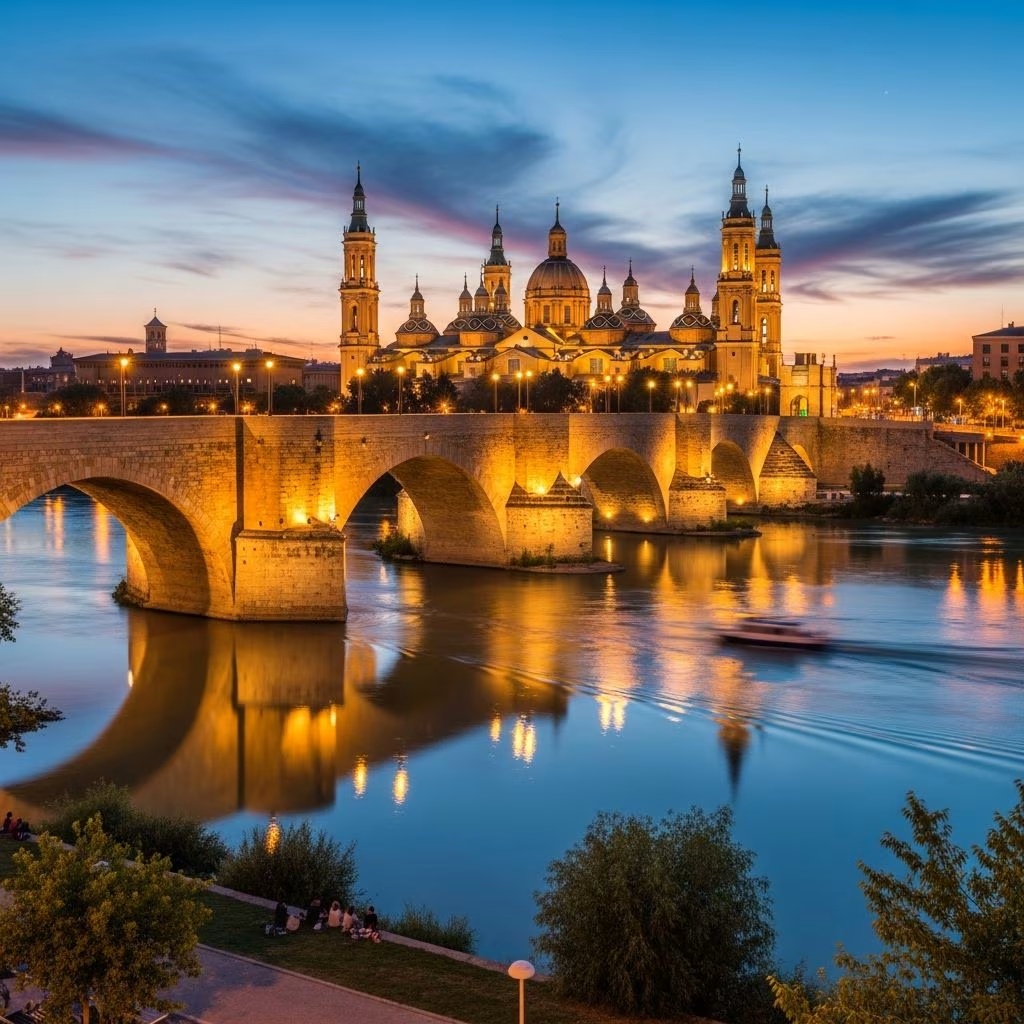
Dominating the skyline and serving as Zaragoza’s most recognizable landmark, the Basilica de Nuestra Señora del Pilar stands as a baroque masterpiece constructed between the 17th and 18th centuries. This monumental church rises dramatically along the banks of the Ebro River, its golden-hued stone contrasting beautifully against the water and surrounding cityscape.
The basilica’s spiritual significance extends beyond its architectural magnificence. According to tradition, the location marks where the Apostle James witnessed an apparition of the Virgin Mary standing upon a jasper pillar in 40 CE, making this one of Spain’s most important pilgrimage destinations. Inside, visitors can observe the actual pillar that has been progressively enclosed within the basilica as successive chapels and structures were added throughout history.
A particular highlight involves ascending the basilica’s bell tower, which offers sweeping panoramic views across the old city. Visitors climb approximately 109 steps after taking an elevator partway up, reaching a vantage point where the urban geography and riverside landscape become comprehensible. Combined ticket packages typically bundle the basilica entry with tower access and admission to related museums, providing excellent value for comprehensive cultural engagement.
Located at the eastern edge of Plaza del Pilar, the Cathedral of El Salvador, commonly known as La Seo, presents an entirely different architectural philosophy from its baroque neighbor. This structure showcases the exquisite tension between Islamic geometric design elements and soaring Gothic interior spaces, with its striking Mudéjar façade providing visual contrast to the impressive vaulted chambers within.
The cathedral’s less crowded status compared to the basilica offers a more intimate exploration opportunity, allowing visitors to appreciate intricate architectural details without navigating large crowds. The building’s exterior stonework reveals the skilled craftsmanship that characterized medieval Aragonese construction.
Zaragoza’s Roman past becomes tangible through several museum experiences and in-situ remains scattered throughout the city center. The Museo del Foro de Caesaraugusta preserves the substructure of the ancient forum, displaying basements, foundations, sewage infrastructure, and water channel systems that sustained Roman civic life. Interpretive reconstructions and video installations help visitors comprehend how these spaces functioned in antiquity.
Walking through Plaza del Pilar, visitors encounter sections of preserved Roman walls, with an impressive 80-meter stretch visible in the northwestern portion of the plaza. The Roman theater ruins and additional archaeological fragments provide evidence of the city’s former prominence as a provincial capital. These remains aren’t segregated in museums but integrated into the living city, creating an archaeological palimpsest where contemporary commerce and social activity occur literally adjacent to ancient stones.
Francisco de Goya, one of Spain’s most influential and revolutionary artists, originated from a small village approximately 28 miles south of Zaragoza. The city has capitalized on this connection by housing an exceptional collection dedicated to his prolific output. The Goya Museum occupies a beautiful Renaissance building and presents more than 250 works spanning paintings, drawings, and prints that document his artistic evolution and the range of his technical capabilities.
For art historians and general enthusiasts alike, this collection provides invaluable insight into Spanish artistic development during the 18th and early 19th centuries. The museum’s architectural setting itself deserves appreciation, with the Renaissance building’s proportions and details complementing the artworks displayed within.
Beyond the principal religious and artistic attractions, Zaragoza supports specialized museums addressing diverse interests. The Zaragoza Museum provides comprehensive overviews of the city’s historical development, while more niche institutions like the Origami Museum and Firefighters’ Museum cater to specific curiosities. These smaller venues often provide less crowded, more personalized experiences compared to major attractions.
Zaragoza holds distinction within Spain as a premier tapas destination, where the practice of combining beverages with complementary small plates reaches sophisticated expression. The city’s food culture reflects broader Aragonese traditions emphasizing quality ingredients, careful preparation, and social dining practices.
The neighborhood known as El Tubo constitutes a warren of narrow medieval streets where some of the city’s finest tapas bars concentrate. Wandering these passages means discovering establishments that range from traditional family-run venues to contemporary interpretations of classic preparations. Plaza del Pilar provides an excellent starting point for tapas exploration, with its central location and vibrant atmosphere attracting both locals and visitors.
Central market facilities like the Mercado Central provide opportunities for travelers to assemble picnic provisions, purchasing fresh local produce, cured meats, cheeses, and prepared items. These markets offer authentic glimpses into how residents source ingredients and reflect the seasonal availability that defines Mediterranean and Iberian cuisine.
Parque Grande José Antonio Labordeta represents one of Zaragoza’s most elegant and expansive green spaces, offering opportunities for leisurely walks, people-watching, picnicking, and general outdoor relaxation. The park’s design provides respite from urban density while maintaining proximity to cultural attractions.
Within the park, the Mirador del Rincón de Goya offers elevated vantage points delivering sweeping city views. These observation areas prove particularly atmospheric during sunset hours when golden light bathes the cityscape and illuminates the river valley.
The Puente de Piedra, or Stone Bridge, crosses the Ebro River in the city center and provides another scenic vantage point. This bridge positions visitors for optimal appreciation of the Basilica del Pilar rising from the riverbanks, creating composition opportunities for photography and contemplative observation.
The 2008 International Exhibition transformed Zaragoza’s waterfront infrastructure, introducing striking examples of 21st-century architectural ambition. The Puente del Tercer Milenio bridge, exceeding 270 meters in length, spans the Ebro while accommodating separate lanes for pedestrian and cycling traffic. This futuristic structure connects previously disconnected neighborhoods including Actur, Almozara, and Delicias, fundamentally altering urban connectivity.
Additional exhibition-related developments like the Water Tower and Bridge Pavilion demonstrate how contemporary design can coexist with historical preservation. These structures introduce visual diversity while creating focal points for visitor navigation.
The city center organizes around several key plazas and neighborhoods, each offering distinct character and functionality. Plaza del Pilar functions as the emotional and geographical heart, anchoring major religious and archaeological sites. Plaza de los Sitios provides access to boutique shopping, souvenir vendors, and additional market opportunities.
The San Miguel neighborhood features pedestrian-friendly pathways encouraging leisurely exploration and street-level shopping experiences. This area blends residential character with commercial activity, offering more intimate urban texture compared to the grand plaza environments.
Travel planners should consider that minimum 2-day stays permit engagement with principal highlights including major museums, the Aljafería palace fortress, foremost religious sites, and introductory culinary experiences. However, extending stays to three or four days substantially enriches the visit, allowing time for architectural detail appreciation, green space exploration, and deeper cultural immersion.
Visitors with week-long availability can combine extensive city exploration with day trips into the surrounding Aragonese countryside, visiting smaller towns, wine regions, and rural landscapes that provide contextual understanding of regional identity.
Travelers should recognize that many Zaragoza attractions close briefly during midday hours, and numerous shops operate limited afternoon hours between approximately 2 PM and 5 PM, reflecting traditional siesta practices. Planning activities with awareness of these schedules prevents frustration and optimizes productivity.
Zaragoza represents a destination that rewards travelers willing to venture beyond Spain’s most famous circuits. The city delivers authentic cultural engagement through its layered history, architectural significance, and vibrant contemporary life. Whether pursuing archaeological understanding, artistic appreciation, gastronomic adventure, or simply seeking respite from overcrowded tourist zones, Zaragoza provides experiences that remain undervalued relative to their actual merit and quality.
