

 Travel Essentials
 Travel Essentials

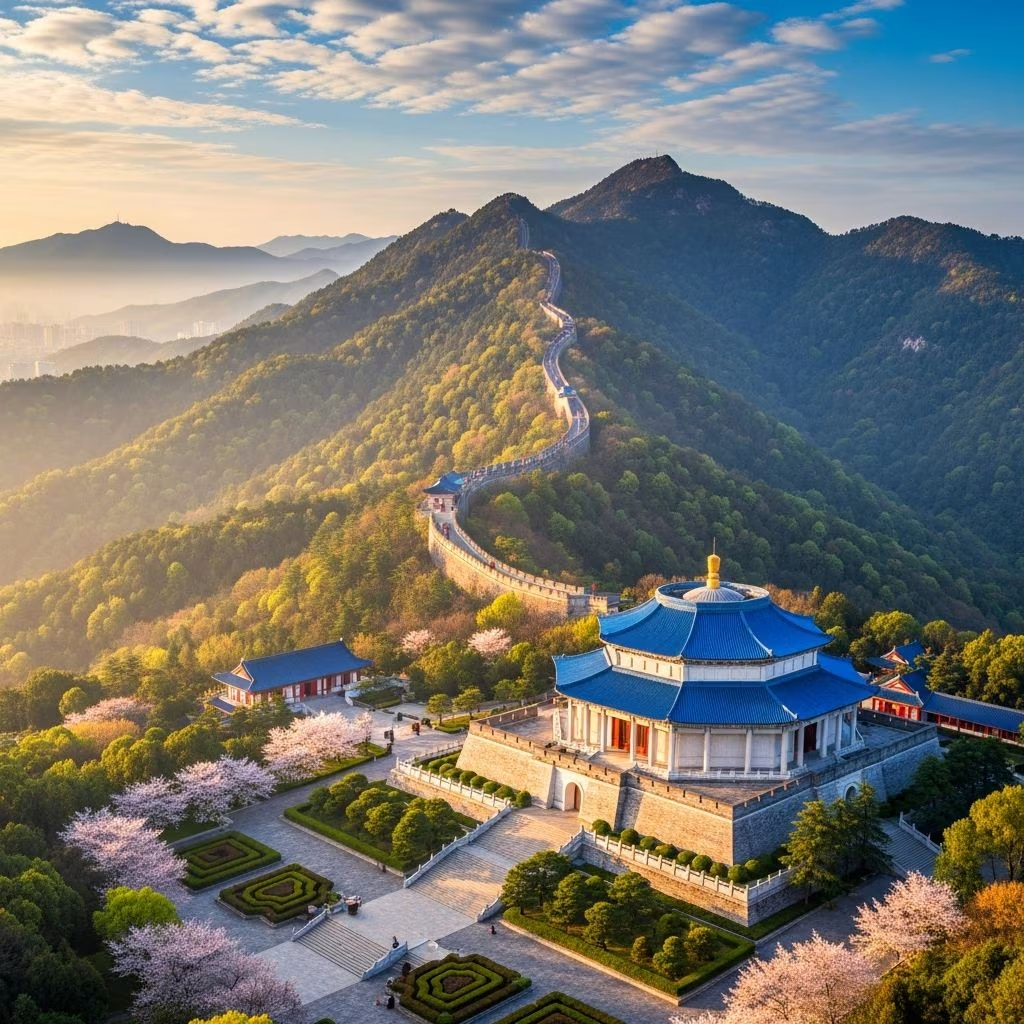
Explore Zhongshan Mountain in Nanjing, home to Sun Yat-sen Mausoleum, Ming Xiaoling Tomb, and stunning vistas. A 5A-rated park with rich heritage and natural beauty.
 Travel Essentials
Perched on the eastern outskirts of Nanjing, Zhongshan Mountain—also known as Purple Mountain or Zijin Shan—stands as a profound symbol of China’s layered past and enduring natural splendor. Spanning 31 square kilometers, this national park weaves together imperial mausoleums, revolutionary memorials, ancient temples, and panoramic viewpoints, drawing millions to its trails each year.
Nanjing, often called the ‘ancient capital of six dynasties,’ finds its spiritual core in Zhongshan Mountain. This range has witnessed the rise and fall of empires, from the Ming Dynasty’s grandeur to the Republic of China’s founding. Named after Dr. Sun Yat-sen, the revolutionary leader who helped establish modern China, the mountain honors his legacy while preserving older relics like the Ming Xiaoling Mausoleum, a UNESCO World Heritage site.
The area’s cultural depth earned it the title of China’s ‘most culturally important mountain in cities.’ Over 200 historic spots dot the landscape, including 42 protected cultural relics, making it a living museum amid lush forests.
Zhongshan Mountain divides into key scenic zones, each offering unique insights into China’s history and artistry. Visitors can spend a full day navigating these areas via shuttles, cable cars, or on foot.
Dominating the southern slope, the Sun Yat-sen Mausoleum is the final resting place of the ‘Father of Modern China.’ Built between 1926 and 1929, this Republic-era marvel features a grand staircase of 392 steps leading to a white marble structure blending Eastern and Western elements. Inside, Sun’s sarcophagus rests under a domed ceiling, surrounded by auxiliary buildings like the Open-Air Music Hall.
The Music Stage, nearby, fuses Greek columns with Jiangnan garden aesthetics, hosting the annual Nanjing Forest Concert in September-October—a symphony amid pines that echoes through the valley.
To the west, the Ming Xiaoling Mausoleum houses Emperor Zhu Yuanzhang and Empress Ma. Constructed in 1381, it set the blueprint for Ming and Qing tombs with its ‘Shixiang Road’—a 2.5 km ‘Sacred Way’ lined by colossal stone animals and warriors. The site’s Square City and Treasure City exude solemn majesty, framed by Plum Blossom Hill’s blooms in winter.
On the eastern flank, Linggu Temple commemorates monk Xuanzang’s translations of Buddhist texts. Paths lead to the Beamless Hall—a wooden-free wonder—and the Soul-Valley Temple, evoking peace amid ancient pines. Nearby, Meiling Palace, a 1930s three-story edifice with upturned eaves and glazed tiles, whispers of Republican-era opulence.
Crowning the mountain at 448 meters, Toutuo Peak offers 360-degree views of Nanjing. A cable car (CNY 60 one-way, 100 round-trip) accesses sites like White Cloud Pavilion, Liu Ji Cave, and Zither-Playing Rock. Dawn from Mountain Dawn Pavilion captures the ‘purple clouds’ inspiring the mountain’s name.
Spring and autumn are prime for visits, with mild weather ideal for hiking. Plum Blossom Hill, within Ming Xiaoling, boasts 35,000 trees of 380 varieties—China’s top plum garden—exploding in pink and white from February to March.
Other gems include Zixia Lake’s reflections, Xiaohongshan’s trails, and the Sports Park for active pursuits. The park’s ecology supports diverse flora, earning its status as a top national forest park.
Zhongshan Mountain National Park, a 5A-rated destination, opens 7am-6:30pm. Recommended time: 4-5 hours, though multi-day itineraries unlock more.
| Attraction | Ticket (CNY) | Highlights |
|---|---|---|
| Ming Xiaoling | 70 | Shixiang Road, Plum Hill |
| Linggu Temple | 35 | Beamless Hall, ancient trees |
| Music Stage | 10 | Concerts, architecture |
| Meiling Palace | 30 | Republican palace |
| All-Inclusive Pass | 100 | Best value |
Access via Metro Line 2 (Muxuyuan or Xiaomafang stations), Bus 34, or sightseeing buses from parking lots. Wear comfy shoes for stairs; shuttles help with mobility.
Beyond sights, the mountain offers respite from urban hustle. Hikers tackle trails like Wutong Avenue, while families enjoy forest galleries. Its affordability—under $20 for most tickets—contrasts vast rewards, akin to a Chinese Yellowstone for history lovers.
Events like the Forest Concert add vibrancy, while anti-Japanese memorials at Wangjiawan honor aviation martyrs, layering 20th-century narratives.
Yes, with multiple zones, it’s ideal for 4-8 hours of exploration.
Cable car to Toutuo Ridge or shuttles between sites.
Yes, from gentle lakeside paths to steep mausoleum stairs.
February-March on Plum Blossom Hill.
Yes, plums and fewer crowds; bundle up.
As a protected park, efforts focus on sustainability—limit plastics, stay on trails. Its blend of ecology, culture, and recreation positions it as Nanjing’s must-see.
