


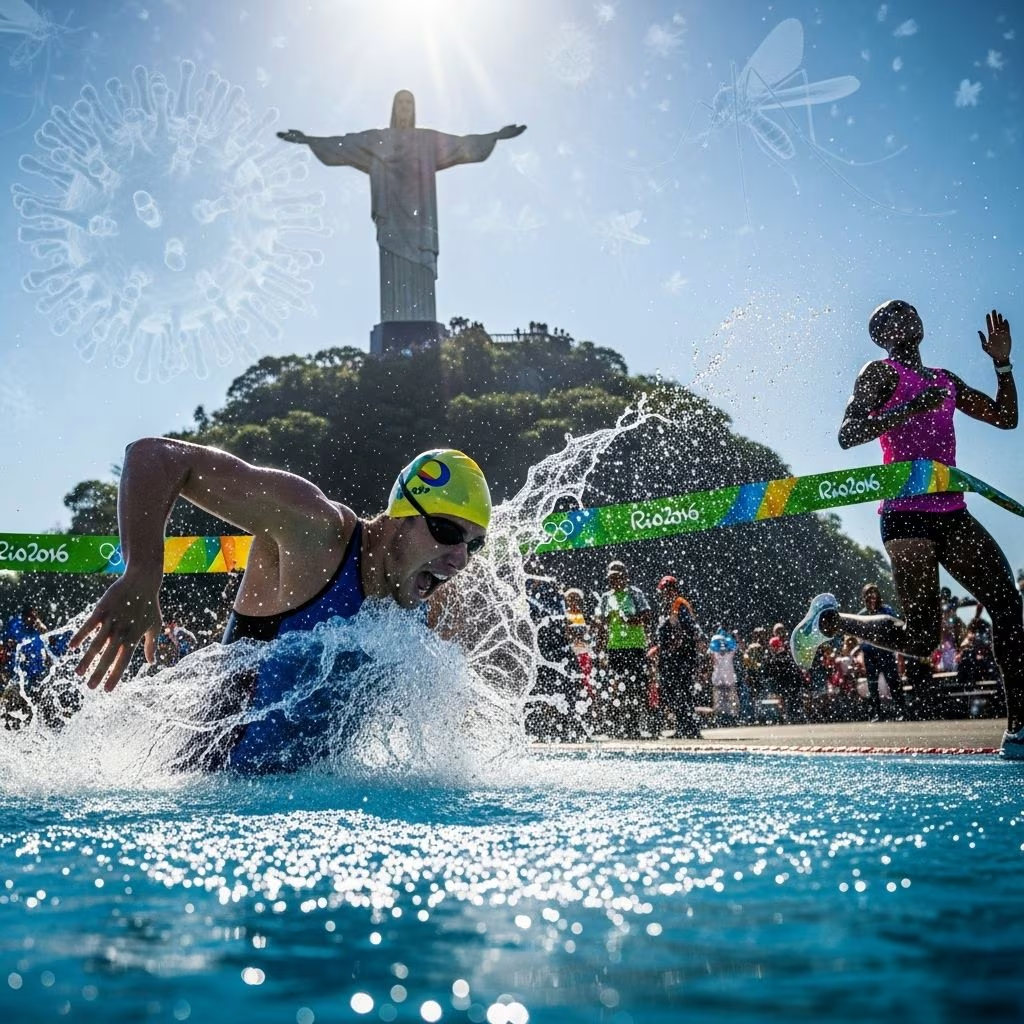
When the Zika virus emerged as a significant public health threat in 2015 and early 2016, few questions loomed larger than whether Brazil would proceed with hosting the Olympic Games scheduled for that summer. The decision to move forward despite widespread concern about viral transmission represented a complex intersection of epidemiological science, economic interests, and public perception. This pivotal moment in both sports history and global health response offers valuable insights into how nations manage competing priorities during health emergencies.
The Emergence of a Health Crisis
The Zika virus outbreak that preceded the Rio Olympics represented an unprecedented challenge for Brazilian public health authorities. In January 2016, the World Health Organization officially declared Zika a Public Health Emergency of International Concern, citing its rapid geographic spread and documented association with microcephaly, a severe birth defect characterized by abnormal smallness of the head in infants born to infected mothers. This declaration underscored the seriousness with which global health institutions viewed the situation.
The timing created particular anxiety: the Olympics were scheduled for August 2016, just months away from the peak of Zika-related public concern. Approximately 500,000 international visitors were expected to attend the games, prompting legitimate questions about whether the event might serve as a vector for spreading the virus to previously unaffected regions. Countries with established populations of Aedes aegypti mosquitoes—the primary vector for Zika transmission—became particularly concerned, as the virus could establish itself quickly in areas where the mosquito species was already present.
Assessing the Actual Risks to Visitors
Despite the dramatic headlines and widespread apprehension, epidemiological analyses conducted in the months leading up to the Olympics painted a more nuanced picture. Researchers predicted that between just 3 and 37 travelers would become infected during their time in Brazil. This remarkably low projection stemmed from several intersecting factors that reduced transmission risk significantly.
First, the Olympic Games were scheduled for August, which corresponds to winter in the Southern Hemisphere. During this season, mosquito populations in Rio de Janeiro experience dramatic declines due to cooler temperatures and reduced rainfall. Seasonal patterns of similar mosquito-borne diseases like dengue fever provided historical precedent suggesting that Zika transmission would plummet during the Olympic period.
Second, the characteristics of Olympic visitors themselves reduced risk substantially. Most attendees would be staying in hotels equipped with air conditioning and window screens, which significantly limited mosquito exposure. Additionally, many international visitors independently implemented protective measures such as insect repellent use and protective clothing, creating multiple layers of defense against mosquito bites.
International Transmission Concerns
While transmission risk to Olympic visitors proved modest, concerns about international spread demanded serious consideration. The theoretical possibility existed that infected travelers might return to their home countries and introduce the virus to new populations through sexual transmission or, in mosquito-endemic areas, through continued mosquito-borne spread.
However, analyses suggested that this risk was equally constrained. The majority of travelers returning to their home countries would be arriving in regions where Aedes aegypti mosquitoes were absent, effectively eliminating the possibility of mosquito-mediated transmission chain continuation. Where mosquitoes were present, sexual transmission among unprotected partners would represent the most likely transmission route, a scenario that would occur at much lower rates than mosquito-borne spread.
Athlete and Public Concerns
Despite scientific evidence suggesting manageable risks, considerable anxiety persisted among both athletes and the general public. A notable number of athletes eligible for competition chose to forgo participation, citing Zika concerns as their reason for withdrawal. In some sports, media observers speculated that athletes unenthusiastic about competing seized upon Zika as a convenient justification for withdrawal, though the genuine health concerns of other athletes were undoubtedly real.
This divergence between scientific risk assessment and public perception illustrated an important challenge in communication during health emergencies. The dramatic nature of Zika’s potential consequences—birth defects affecting newborns—created legitimate concern that transcended numerical risk probabilities for many people, particularly those of childbearing age or planning pregnancies.
Brazil’s Public Health Infrastructure Response
Brazilian health authorities undertook substantial preparations to minimize transmission risks during the Olympic period. The Ministry of Health implemented mosquito control programs, increased vector surveillance, and coordinated public health messaging to inform both residents and visitors about protective measures. These interventions, though sometimes viewed as merely precautionary, demonstrated governmental commitment to athlete and visitor safety.
The epidemiological data supporting Brazil’s decision to proceed ultimately validated the confidence in public health systems. By early August 2016, immediately preceding the Olympic opening, the Brazilian Ministry of Health’s Epidemiologic Bulletin reported no new Zika cases in Rio de Janeiro for an extended period. This absence of new cases suggested that seasonal decline had indeed neutralized the acute outbreak phase.
Outcomes and Historical Validation
The decision to proceed with the Olympic Games proved vindicated by subsequent events. Not a single case of Zika virus or microcephaly was reported among foreign visitors to the 2016 Summer Olympics. This outcome was not accidental but rather the predictable result of understanding the epidemiological context: seasonality had naturally reduced transmission before the games commenced, and the characteristics of the Olympic population and venues provided additional protective barriers.
Lessons for Future Global Health Emergencies
The Zika-Olympic situation provided important lessons for managing future health crises coinciding with major international events. Several principles emerged as particularly valuable:
- Temporal context matters: Understanding seasonal disease patterns can inform both risk assessment and decision-making, preventing unnecessary cancellations or excessive resource expenditure on low-risk situations.
- Population-specific vulnerability assessment: Not all populations face equal risk. Athletes and hotel-staying tourists face very different exposure levels than local populations with different living arrangements and ongoing exposure.
- Communication challenges persist: Even when data suggests low risk, public perception may remain elevated. Health authorities must invest in clear, evidence-based communication to bridge this gap.
- Local burdens differ from visitor risks: While international visitors faced minimal risk, local populations in urban slums continued experiencing Zika transmission and its consequences long after the Olympics concluded. Health emergency responses must consider disparities in vulnerability and access to protective resources.
FAQ: Understanding Brazil’s Olympic Decision
Why did Brazil decide to hold the Olympics despite Zika?
Brazil evaluated scientific evidence indicating that transmission risk to visitors was low, particularly given the August timing corresponding to winter season in the Southern Hemisphere when mosquito populations naturally decline.
Did any Olympic visitors contract Zika?
No reported cases of Zika among foreign visitors to the 2016 Rio Olympics were documented, validating the risk assessments that preceded the decision.
Why were some athletes concerned about attending?
Athletes, particularly those of childbearing age, were understandably concerned about Zika’s association with birth defects. Their concerns, while perhaps exceeding the numerical risk level, reflected legitimate health considerations that individuals must personally evaluate.
Was the Zika crisis resolved by the Olympics?
The acute outbreak phase had naturally declined by August due to seasonal factors, though Zika continued affecting local populations in Brazil afterward, particularly disadvantaged communities.
The Broader Context: International Sporting Events and Health
Brazil’s experience with the Zika-Olympic decision illustrates the complex negotiation between public health, economic interests, and international relations that characterizes hosting major sporting events. Future host nations will likely face similar situations where genuine health concerns must be weighed against epidemiological evidence, economic implications, and international expectations.
The decision to proceed with the Rio Olympics ultimately rested on solid scientific foundations. While the anxiety surrounding the event was understandable given Zika’s serious potential consequences, the numerical risk proved manageable through a combination of natural seasonal decline, protective infrastructure, and characteristics of the Olympic visitor population. This outcome provides valuable perspective for future decision-makers confronting similar scenarios: rigorous epidemiological analysis, rather than either panic or complacency, should guide policy during health emergencies.
References
- Zika at the Rio Olympics: Is the Risk Real? — Britannica. 2016. https://www.britannica.com/story/zika-at-the-rio-olympics-is-the-risk-real
- List of athletes not attending the 2016 Summer Olympics due to Zika virus concerns — Wikipedia. 2016. https://en.wikipedia.org/wiki/List_of_athletes_not_attending_the_2016_Summer_Olympics_due_to_Zika_virus_concerns
- Seven months after Rio Olympics, Zika continues to plague babies in urban slums — UC Berkeley News. 2017-03-23. https://news.berkeley.edu/2017/03/23/seven-months-after-rio-olympics-zika-continues-to-plague-babies-in-urban-slums/

